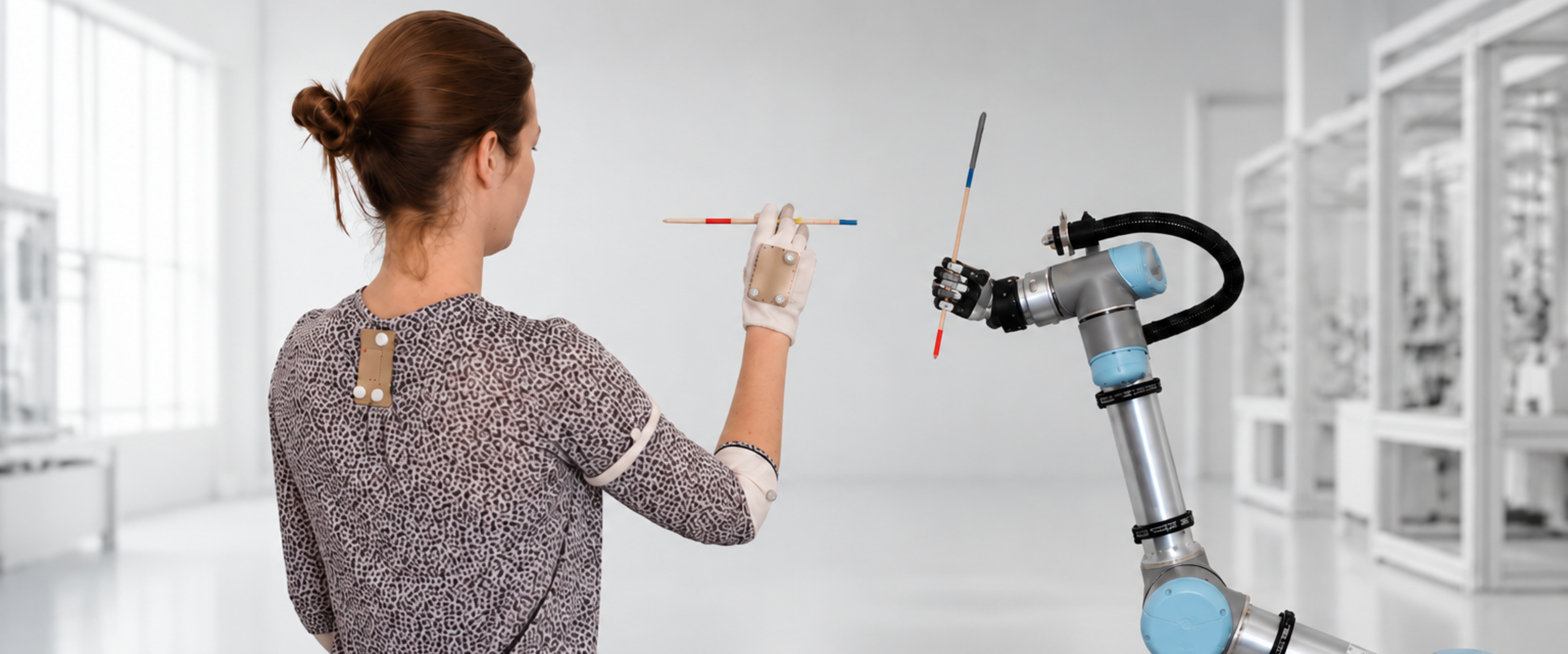
Herzliche Einladung Geburtags-Bionik-Seminar im Wintersemester 2026/2027. Diese interdisziplinäre Veranstaltung behandelt Themen aus Biologie, Bionik und Ingenieurwissenschaften. Es richtet sich an Wissenschaffende, Studierende und die interessierte Öffentlichkeit.
You are cordially invited to attend the Birthday Biomimetics Seminar in the winter term 2026/2027. This interdisciplinary seminar covers topics from biology, bionics and engineering. It is aimed at scientists, students and the interested public.
Wie bewegt sich ein Vogel, wie lernt ein Roboter vom Menschen, und was können intakte Ökosysteme für unsere Gesundheit leisten? In diesem Semester spannt das Bionik-Seminar den Bogen von der Robotik über die Evolutionsbiologie bis hin zu nachhaltigen Lösungen im internationalen Kontext. Vier Gäste geben Einblicke in ihre Forschung und Arbeit:
How does a bird move, how does a robot learn from humans, and what benefits can healthy ecosystems bring to our health? This term, the bionics seminar covers a wide range of topics, from robotics and evolutionary biology to sustainable solutions in an international context. Four guest speakers will provide insights into their research and work:
27.10.2026 – 17:00 Uhr
Prof. Dr. Lisa Gutzeit, Hochschule Bremen
New research challenges in robotics demand new methods to acquire a deeper understanding of human behavior and intentions. Especially in Learning from Demonstration (LfD), efficient approaches are needed to recognize movement segments and extract reusable motion building blocks which are transferred to a robotic system. This talk presents algorithms to detect, annotate, and hierarchically structure human building block movements from manipulation recordings. Evaluated on tasks ranging from single-arm movements to dual-arm object manipulations and teleoperated exoskeleton data, these methods enable the automated transfer of human skills—such as throwing—to robotic systems, paving the way for intuitive and effective hierarchical robot learning.
03.11.2026 - 17:00 Uhr
Marie-Yon Strücker, B.Sc. MPhil, Associate Programme Management Officer, UN Environment Programme (UNEP), Bangkok
Nature is not only a model for technological innovation but also holds many of the answers to how we can live sustainably on our planet. This presentation will explore how biodiversity conservation and naturebased solutions can protect and restore ecosystems while supporting human health and well-being. It will provide insights into the environmental dimension of the One Health approach, which recognizes the close interconnections between the health of humans, animals and the environment. Examples from the AsiaPacific region will illustrate how healthy and resilient ecosystems can reduce health risks, support climateadaptation and advance sustainable development. The presentation will also offer personal reflections on my journey from biomimetics to international cooperation within the United Nations.
10.11.2026 – 17:00 Uhr
Prof. Dr. Pauline Provini, Muséum National d'Histoire Naturelle, Paris
Birds display a remarkable diversity of locomotor and vocal behaviours, shaped by millions of years of evolution. This lecture will introduce how functional morphology links anatomical structure to biomechanical function to understand the evolution of these behaviours. Drawing on my research on birds, I will illustrate this approach through studies ranging from the biomechanics of terrestrial locomotion and the evolutionary origins of flight to the mechanisms underlying birdsong production. Combining comparative anatomy, X-ray imaging, biomechanics, and acoustics, these studies reveal how functional demands and evolutionary constraints have shaped the locomotor and vocal systems of birds, providing new insights into the evolution of complex biological traits.
24.11.2026 - 17:00 Uhr
Prof. James Usherwood, BA MRes PhD, The Royal Veterinary College, University of London
Effective transport – important to both animals and vehicles – requires that a load can be carried as it translates with low mechanical power demand, and that power can be supplied economically. These points are obvious in bicycle design: the wheels allow vertical weight to be supported during horizontal motion, using spokes that do not change length when under tension; and pedals and gears allow favourable mechanical advantage between muscle and external forces, along with the decoupling of the single contraction per cycle constraint apparent in animals. Much of animal locomotor form and function can be understood by focussing on the mechanisms enabling – and compromises between – these two fundamental demands. These will be explored for gliding and flapping birds, swimming fish and whales, and walking and running bipeds and quadrupeds. Implications for drone and robot legs, and the current state of a bioinformed 6-bar linkage leg design, will be discussed.
Die Übertragung der Vorträge findet über das Video-Konferenz-System ZOOM statt. Für die Teilnahme bestehen zwei Möglichkeiten:
Link: hs-bremen.zoom.us/j/98960999390
Meeting-ID: 989 6099 9390
Code: Bionik
Bitte beachten Sie die Datenschutzhinweise zum Einsatz von ZOOM.
Einlass ist ca. 10 Minuten vor Beginn.
Internationalen Studiengang Ship Management – Nautical Sciences studieren ISMN Online-Info-Session