Jump directly to the page content
  • AULIS
  • CampInO
  • Webmail
  • Wi-Fi (eduroam)
  • Change password
  • Semester Dates
  • Account Activation
  • Prospective students For prospective students
  • First-semester students For first-semester students
  • International Students
  • Press and media For press and media
  • Job seekers
  • DE
  • Easy English
  • Dark Mode
  • Experience studying
    • Programmes
      • Bachelor
      • Master
      • International MBA & Master
    • Before your studies
      • Step by step to university
      • Orientation for prospective students
      • Application and admission
      • International applications
    • During your studies
      • First-semester students
      • Semester dates
      • Logins and portals
      • Formalities
      • Going abroad
      • Complementary offers for students
    • After your studies
      • Master's degree programmes
      • Career perspectives
      • Continuing education
      • Information for Alumni
      • Doctorates
    • All about studying
      • Student life
      • Student participation
      • Healthy through your studies
      • Mensa, canteens and cafeterias
      • Culture
      • Sports
    • Advice and support
      • Central Student Advisory Service
      • Doubting Your Studies
      • Finances
  • Experience research
    • Research and transfer profile
      • Strategic partnerships
      • Institutes
      • Research projects
    • Research and transfer clusters
      • Blue Sciences
      • Digital transformation
      • Quality of life
      • Aerospace
    • Early career researchers
    • Transfer and cooperation
    • Research Services
    • Start-up service & FreiRAUM@HSB
      • Makerspace
  • Experience continuing education
  • Experience HSB
    • News
      • Press Releases
      • News Items
      • Events
    • Faculties
      • School of International Business
      • School of Architecture, Civil and Environmental Engineering
      • School of Social Sciences
      • School of Electrical Engineering and Computer Science
      • School of Nature and Engineering
    • Organisation
      • University Management
      • Administration
      • Central Units
      • Inter-university units
      • Committees and representation of interests
    • Our profile
      • Mission Statement
      • Internationality
      • Equality
      • Diversity
      • Sustainability at HSB
      • Hochschule Bremen at a glance
    • Campus Life
      • Location and access
      • History
      • Culture
      • Sports and activities
    • Working at HSB
      • Get to know HSB
      • We are HSB!
      • UAS professorship
      • Job offers
      • Your application to HSB
      • Contact and advice
      • Any further questions?
    • Staff
    • AULIS
    • CampInO
    • Webmail
    • Wi-Fi (eduroam)
    • Change password
    • Semester Dates
    • Account Activation
    • Prospective students For prospective students
    • First-semester students For first-semester students
    • International Students
    • Press and media For press and media
    • Job seekers
  • DE
  • Easy English
  • Dark Mode
Experience studying
  • Programmes
    • Bachelor
    • Master
    • International MBA & Master
  • Before your studies
    • Step by step to university
    • Orientation for prospective students
    • Application and admission
    • International applications
  • During your studies
    • First-semester students
    • Semester dates
    • Logins and portals
    • Formalities
    • Going abroad
    • Complementary offers for students
  • After your studies
    • Master's degree programmes
    • Career perspectives
    • Continuing education
    • Information for Alumni
    • Doctorates
  • All about studying
    • Student life
    • Student participation
    • Healthy through your studies
    • Mensa, canteens and cafeterias
    • Culture
    • Sports
  • Advice and support
    • Central Student Advisory Service
    • Doubting Your Studies
    • Finances
Experience research
  • Research and transfer profile
    • Strategic partnerships
    • Institutes
    • Research projects
  • Research and transfer clusters
    • Blue Sciences
    • Digital transformation
    • Quality of life
    • Aerospace
  • Early career researchers
  • Transfer and cooperation
  • Research Services
  • Start-up service & FreiRAUM@HSB
    • Makerspace
Experience continuing education
Experience HSB
  • News
    • Press Releases
    • News Items
    • Events
  • Faculties
    • School of International Business
    • School of Architecture, Civil and Environmental Engineering
    • School of Social Sciences
    • School of Electrical Engineering and Computer Science
    • School of Nature and Engineering
  • Organisation
    • University Management
    • Administration
    • Central Units
    • Inter-university units
    • Committees and representation of interests
  • Our profile
    • Mission Statement
    • Internationality
    • Equality
    • Diversity
    • Sustainability at HSB
    • Hochschule Bremen at a glance
  • Campus Life
    • Location and access
    • History
    • Culture
    • Sports and activities
  • Working at HSB
    • Get to know HSB
    • We are HSB!
    • UAS professorship
    • Job offers
    • Your application to HSB
    • Contact and advice
    • Any further questions?
  • Staff
  1. Homepage
  2. Study
  3. Sustainable Maritime Transportation & Digitalisation M.Sc.*
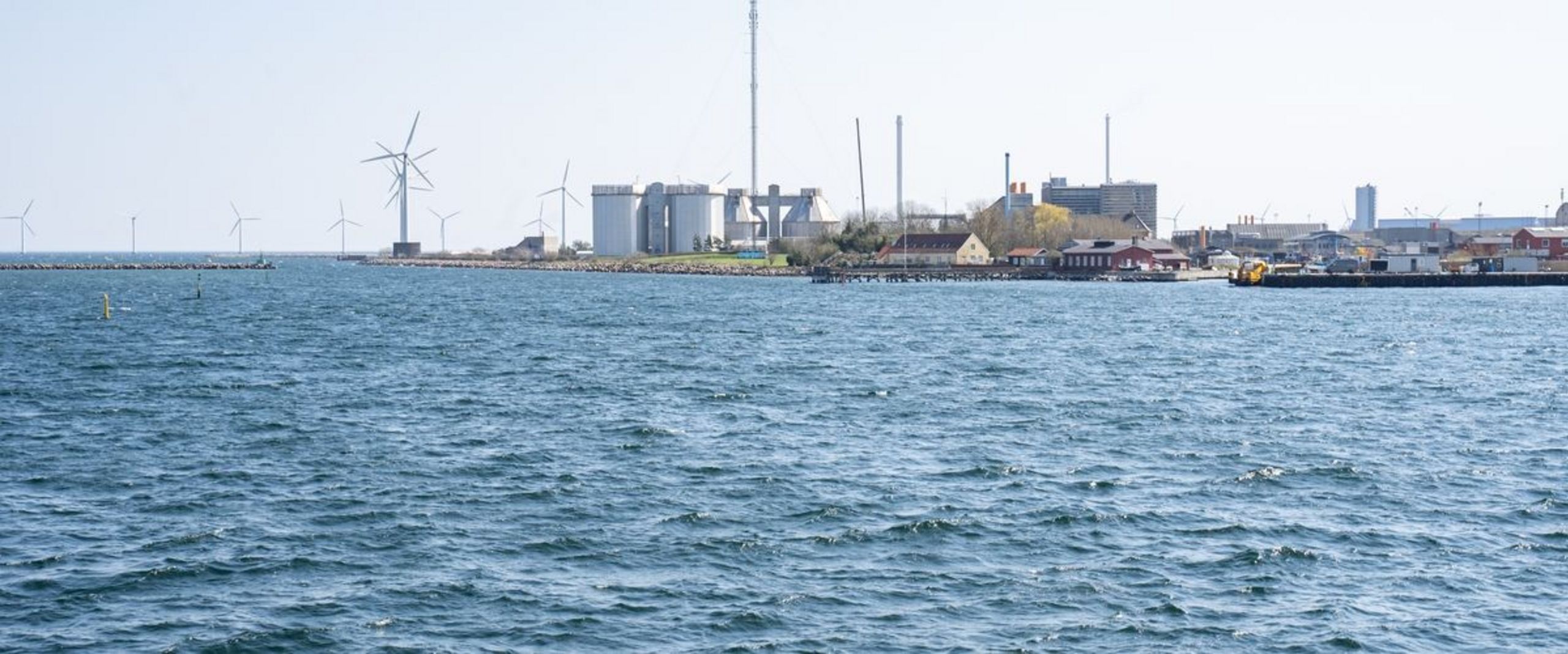
Industrieanlage an der Nordsee
© HSB-Louisa Windbrake

School of Nature and Engineering

Sustainable Maritime Transportation & Digitalisation M.Sc.*

Become a leader who actively shapes the sustainable transformation of the maritime economy. Interdisciplinary, digital, practice-oriented – through unique Tandem Teaching with industry partners.

*subject to successful completion of the ongoing accreditation and authorisation process

Overview

Degree Master of Science
Start of study Summer semester
Application period Summer semester 15 December until 15 January
Standard period of study 3 semesters (full-time) / 6 semesters (part-time)
Credits 90
Accredited

*subject to successful completion of the ongoing accreditation and authorisation process

Admission restricted Yes
Language of instruction English
Faculty/institution School of Nature and Engineering
Stay abroad Optional
Study format Stay abroad optional, Dual study optional, Part-time study

The master's degree programme "Sustainable Maritime Transportation & Digitalisation" qualifies you for leadership roles in the sustainable transformation of the maritime economy. You study at the only university of applied sciences in Germany that unites nautical science, naval architecture and maritime logistics under one roof – with a focus on digitalisation, sustainability and management.

Through Tandem Teaching, you learn from university instructors and industry experts together. In two intensive practical projects, you work on real challenges faced by maritime companies. Choose between full-time (3 semesters), part-time (6 semesters), or dual with your company – all tracks combine online/hybrid and in-person phases flexibly.

Perspectives

After successful graduation, you will analyse complex challenges of the maritime economy from various perspectives, identify systemic connections and develop sustainable, data-based solutions.

Career fields for graduates:

  • Leadership positions Leadership positions in shipping companies, shipyards, ports and maritime service providers
  • Sustainability and transformation management Sustainability and transformation management in the maritime industry
  • Digitalisation and innovation manager Digitalisation and innovation manager for maritime processes and business models
  • Consultant Consultant for maritime strategy, technology and sustainability
  • Research and development Research and development in maritime research institutions
  • Doctorate Doctorate at universities of applied sciences and universities

Job profiles: Fleet Manager, Sustainability Manager, Digital Transformation Manager, Operations Manager, Business Development Manager, Research & Innovation Manager

Tracks

The master's degree programme is available in three tracks – choose the model that fits your life situation.

  • Graduation in 1.5 years. Classes concentrated on two days per week in blended learning format. This gives you the opportunity to integrate your study times into your existing professional routine if needed. All dates are communicated in advance each semester for optimal planning.

    Structure:

    • Semesters 1 & 2: 5 modules each (foundations, specialisation, practical project)
    • Semester 3: master's thesis
  • Graduation in 3 years if you have a full-time employment. Modules spread over 5 semesters, with the sixth semester reserved for the master's thesis. Classes concentrated on two days per week in blended learning format. All dates are communicated in advance each semester for optimal planning.

    Structure:

    • Semesters 1–5: 2 modules each
    • Semester 6: master's thesis
  • Combine both variants (full-time or part-time) with a fixed partnership with a maritime company, e.g. your employer. You work on your practical projects and master's thesis directly with your employer (or a cooperation partner of the university).

All tracks use the same blended learning concept: There is an online/hybrid preparation phase paired with two-day in-person workshops and an online/hybrid follow-up and Q&A session.

  • Nautikstudierende arbeiten mit Seekarten.
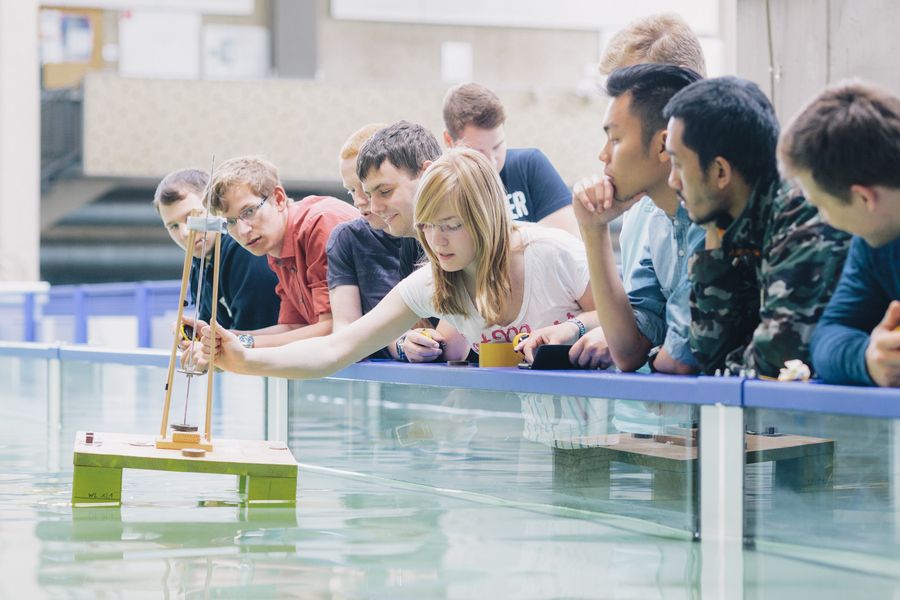
  • Studierende testen eine schwimmende Konstruktion in einem Wasserbecken.
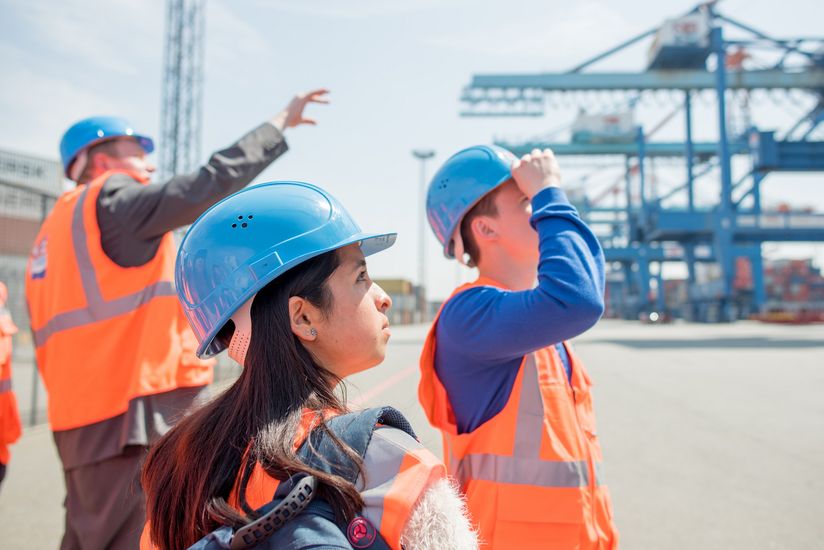
  • Ein Beschäftigter führt Studierende in Warnwesten und Schutzhelmen durch ein Containerterminal.

Internationality

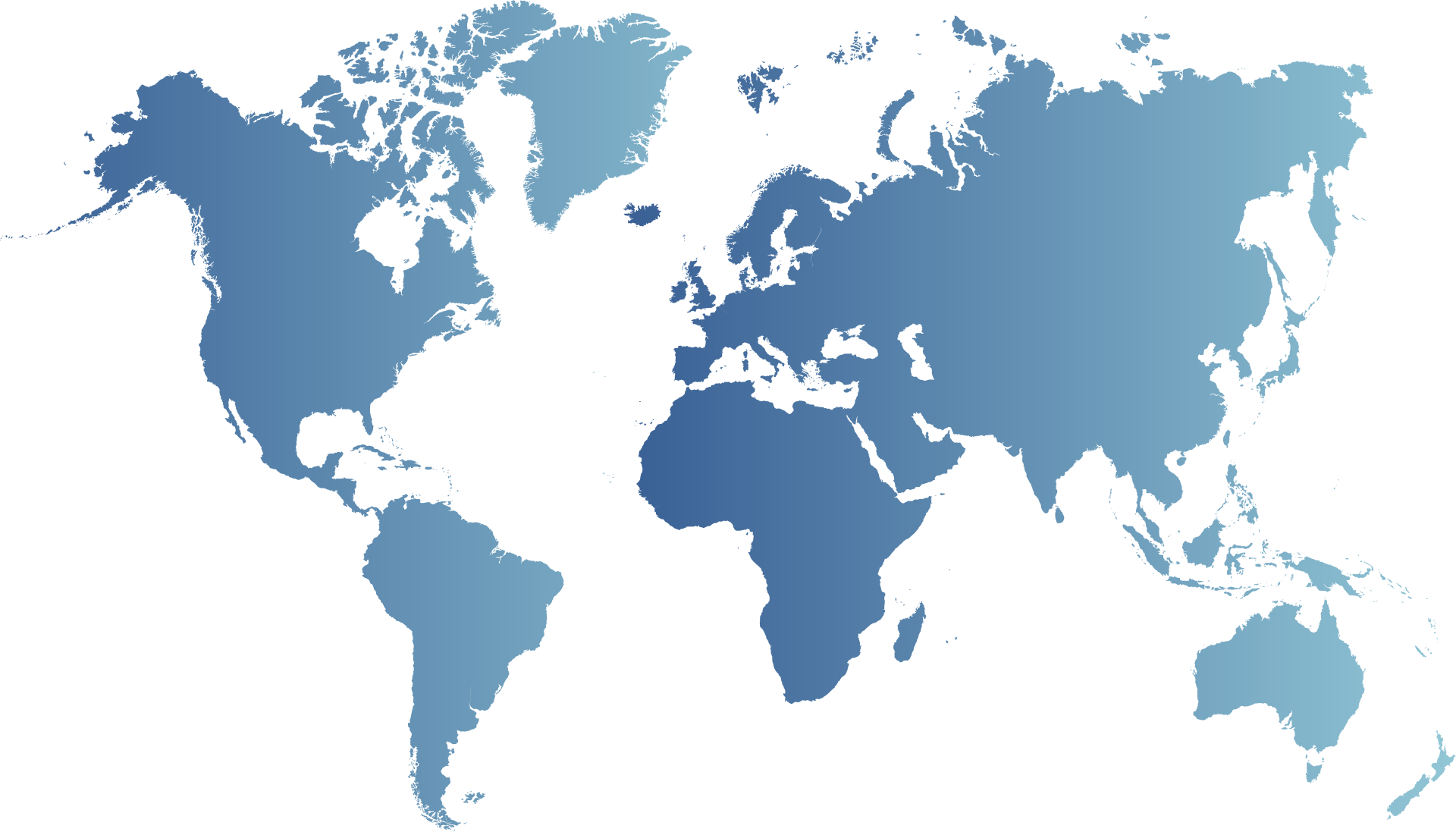
The degree programme is conducted entirely in English and prepares you for international careers. Optionally, you can also study a semester abroad. Through our strategic partnerships, you benefit from a global network:

  • IAMU (International Association of Maritime Universities): Worldwide network of over 60 maritime universities. Opportunities for visiting professors, joint projects and semesters abroad.
  • STARS-EU (Strategic Alliance for Regional Transition): European university alliance with partners in 9 countries. Access to modules, summer schools and joint research projects.
  • DAAD-Projekt TAMP (Transnational Accessible Master Programmes): As one of three pilot degree programmes, funded until 2028. Supports international mobility and transnational study models.
HSB's partner universities

Programme structure

Sample programme structure for the 3 semester full-time track

    • Maritime transport system within the global supply chain; actors, information and incentives.
    • Fundamentals of ship theory & hydrodynamics; resistance, propulsion, sea margin; performance data quality.
    • Energy efficiency: fuels, EEXI, CII; technical and operational measures; regulatory context.
    • Economic and ecological impacts of maritime operations; KPIs and normalisation.
    • Routing & ETA optimisation; weather routing; just-in-time arrivals; decision-support basics.
    • Port operations, shore power and green port initiatives; data standards and collaboration.
    • Integrated case studies applying a holistic approach across ship, route and port.
    • Program structures and principles
    • Data structures and database management systems
    • Algorithm design and analysis fundamentals (e.g., sorting, searching, graph algorithms)
    • Geographic Information Systems (GIS) and spatial analytics
    • Programming fundamentals for data analysis (Python or R)
  • I. Project Management Fundamentals and Application

    • Core Concepts: Definition of projects, project environment, and the role of the project manager.
    • Methodology: Models for handling agile, traditional, and hybrid projects. Project phases and processes (initiation, planning, executing, monitoring, controlling, closing).
    • Planning Tools: Creating Scope Statements, Work Breakdown Structures (WBS), resource allocation, risk and opportunity management (qualitative and quantitative analysis), and defining a Project Management Plan (e.g. as Gantt chart).
    • Soft Skills & Leadership: Team development, conflict resolution, cooperation, networking, and the importance of soft skills like communication

    II. Innovation and Sustainability Frameworks

    • Innovation: Concept and typology of innovation, innovation process, models, and organizational forms for innovation management. Finding creative solutions and innovation management techniques.
    • Sustainability: Sustainability principles (e.g. P5 standard), Technology Assessment, and evaluating technological developments against sustainability criteria. Sustainable Project Management incorporating environmental, social, and economic impact.
    • Ethics and Governance: Importance of ethical considerations and aligning projects with organizational governance structures.

    III. Theory Practice Transfer (TPT) and Project Execution

    • Project Context: Structuring, execution, and monitoring of a real-world task provided by an industry partner/own employer.
    • Stakeholder Engagement: Identifying and managing stakeholders, effective communication with external partners, and managing their expectations.
    • Deliverables: Production of project documentation (e.g., project report/paper, exposé, draft plan) and final presentation/pitch of the solution to external stakeholders.
    • Introduction to risk management: definitions, objectives, and frameworks (ISO 31000; IMO context)
    • Basic concepts of probability: likelihood, consequence, risk levels, and simple probability combinations relevant to safety and reliability
    • Risk assessment tools: FMEA, risk matrix approach, and the IMO’s Formal Safety Assessment (FSA) methodology
    • Life-cycle management: stages from design to decommissioning; maintenance planning; total cost of ownership
    • Economic evaluation: ROI, NPV, and cost–benefit analysis in maritime investments
    • Sustainability perspective: ecological footprint, life-cycle cost vs. environmental impact
    • Decision-making under uncertainty: qualitative ranking, scenario evaluation, and prioritisation of mitigation measures
    • Case studies: integrated maritime examples linking technical, economic, and environmental aspects
  • Sustainability of and digitalisation in the maritime transport sector - Legal and Regulatory Aspects – Students will be introduced to the legal and regulatory aspects of the twin, bidirectional challenges that impact and trigger innovation in maritime transport businesses: sustainability and digitalisation. The course will rely on case studies and best practices to illustrate the legal and practical context of sustainability and digitalisation issues in maritime transport.

    1. A. Sustainability - An overview of selected regional (EU) and global rules on sustainable shipping with focus on the decarbonization of the maritime sector will be presented. Special attention will be given to the challenges faced by decision-makers and managers in complying with the regulations to decarbonize shipping.
    2. B. Digitalisation - Technological and digital developments such as autonomous vessels, autonomous systems and automation of business operations are rapidly and dynamically transforming the maritime transport sector. This course introduces the students to the legal framework of digital technologies in the commercial context. Areas covered will include the legal and regulatory frameworks on 1) E-commerce, digital markets and digital services, 2) on data, including protection of databases, data governance, personal data protection, intellectual property aspects of content and data, and 3) on artificial intelligence.

    Procurement – This course will be both theoretical and practical. Topics covered will include the fundamentals of procurement, procurement processes, procurement planning and strategy, sourcing and supplier selection, negotiations, contract management, ethics and compliance, and procurement performance measures. Under the wider umbrella of sustainability and digitalisation, special attention will be paid to digital contracts and e-procurement. Students will be required to test the knowledge learned by way of negotiation exercises and the drafting of sample procurement agreement.

    • Digital technologies and architectures in ship and port systems
    • Sensors, data acquisition and communication networks (IoT, cloud–edge integration)
    • Automation, control and system integration in maritime applications
    • Artificial Intelligence (AI) and machine learning methods for performance optimisation and predictive maintenance
    • Big Data architectures and processing in ship and fleet operations
    • Cyber Security principles, risk management and resilience strategies
    • Distributed Ledger Technologies (DLT) for secure and transparent data exchange
    • Digital transformation fundamentals: drivers, barriers, and maturity assessment in maritime organizations
    • Sustainable digital business models: Business Model Canvas, value creation through digitalisation in shipping and logistics
    • Change management: Frameworks for leading digital and sustainable transformation initiatives
    • Digital leadership: managing distributed teams, stakeholder engagement, and communication strategies
    • Data-driven decision making for sustainability: KPIs for environmental performance, emissions monitoring dashboards, and the Balanced Scorecard approach
    • Digital strategy development: roadmapping sustainable digital investments, evaluation and prioritization methods
    • IT governance, digital risk management, and energy-efficient IT practices
    • Case studies: digital transformation driving sustainability in the maritime industry
  • Elective – Maritime Simulation and Optimization

    • maritime simulators as research tool
    • simulation and modeling techniques for ships, engine and cargo
    • documentation of simulation results
    • validation methods

    Elective – Autonomous Maritime Systems

    Technology Landscape and System Architecture

    • Degrees of maritime autonomy (IMO MASS Degree 1–4) and current commercial implementations
    • Sensor fusion, perception systems, and COLREGs-compliant collision avoidance algorithms
    • Connectivity infrastructure, Shore Control Centre (SCC) architecture, and cybersecurity

    Regulatory, Legal, and Insurance Environment

    • IMO MASS regulatory scoping exercise and emerging goal-based MASS Code
    • Flag state frameworks, classification society notations, and STCW implications
    • Liability attribution and P&I insurance considerations for unmanned vessel operations

    Management, Business Case, and Organisational Change

    • Technology readiness assessment and total cost of ownership modelling for autonomous deployments
    • Procurement of autonomous systems: performance specifications, vendor evaluation, and contract structuring
    • Remote Control Centre design, workforce transition, and reskilling of seafarers for remote operations roles
    • Project scoping and problem definition with industry partners: identifying relevant challenges in digitalisation, sustainability, or change management
    • Research design and methodology selection: qualitative and quantitative approaches for industry-oriented projects
    • Stakeholder analysis and management in maritime organizations
    • Application of frameworks from previous modules: Business Model Canvas, change management models, digital maturity assessment, sustainability metrics
    • Data collection and analysis methods: interviews, surveys, operational data analysis, benchmarking
    • Solution development: feasibility analysis, risk assessment, and implementation planning
    • Project management: agile methods, timeline management, deliverable planning
    • Industry collaboration practices: communication protocols, confidentiality, intellectual property considerations
    • Presentation techniques: executive summaries, project reports, stakeholder presentations
    • Critical reflection and lessons learned documentation
  • Elective – Maritime Simulation and Optimization

    • maritime simulators as research tool
    • simulation and modeling techniques for ships, engine and cargo
    • documentation of simulation results
    • validation methods

    Elective – Autonomous Maritime Systems

    Technology Landscape and System Architecture

    • Degrees of maritime autonomy (IMO MASS Degree 1–4) and current commercial implementations
    • Sensor fusion, perception systems, and COLREGs-compliant collision avoidance algorithms
    • Connectivity infrastructure, Shore Control Centre (SCC) architecture, and cybersecurity

    Regulatory, Legal, and Insurance Environment

    • IMO MASS regulatory scoping exercise and emerging goal-based MASS Code
    • Flag state frameworks, classification society notations, and STCW implications
    • Liability attribution and P&I insurance considerations for unmanned vessel operations

    Management, Business Case, and Organisational Change

    • Technology readiness assessment and total cost of ownership modelling for autonomous deployments
    • Procurement of autonomous systems: performance specifications, vendor evaluation, and contract structuring
    • Remote Control Centre design, workforce transition, and reskilling of seafarers for remote operations roles
    • Determine the research task or question
    • Identify and analyze literature
    • Plan and determine the frame of content and time (exposé and draft of Table of Content)
    • Determine methods of research
    • Work on scientific development of answers
    • Analyze and discuss data
    • Structure, develop and write the thesis
    • Defense of the thesis

Module manual

  • Module manual Sustainable Maritime Transportation & Digitalisation M.Sc. (draft version*) (PDF, 744 KB, File does not meet accessibility standards)

Contact

Ilknur Colmorn

Prof. Dr. Ilknur Colmorn
+49 421 5905 4134
+49 176 1514 0361
Email

  • Visit our Instagram profile Visit our Instagram profile
  • Visit our Facebook page
  • Visit our YouTube channel
  • Visit our Xing profile
  • Visit our LinkedIn profile
  • Contact
  • Cookies
  • Location and access
  • Career
  • Legal notice
  • Data privacy policy
  • Accessibility

© HSB - Hochschule Bremen 2026