Hochschule Bremen - City University of Applied Sciences (HSB) is part of the European STARS EU alliance. As one of the initiatives of this strategic network, international and interdisciplinary teams of students from nine countries have developed ideas for the future of European higher education institutions: the European campus as a real-world laboratory. The results will be presented on Tuesday 30 June from 5 pm with a vernissage at the AB Gallery in the HSB’s Transfer Laboratory on the Neustadt Campus (Neustadtswall 30, 28199 Bremen). From 1 to 8 July 2026, anyone interested can visit the exhibition free of charge daily from 12 noon to 5 pm. A public closing presentation is scheduled for Tuesday, 7 July, from 10.15 am at the HSB. Anyone interested is warmly welcome. The event will be held in English and will be streamed online.
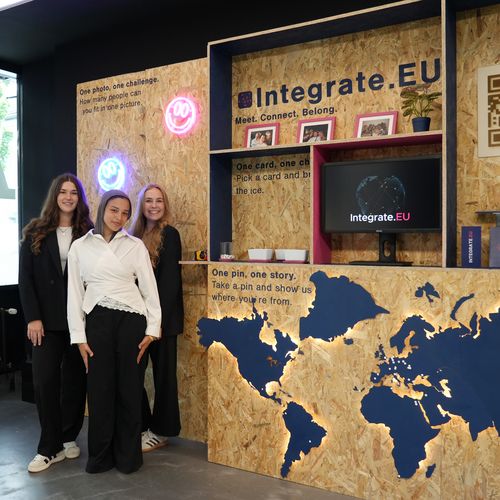
The ‘Ou(te)r Campus – European Campus, A Living Lab’ project has been under development for a year as a living lab at the School of Architecture at HSB. It focuses on the question of how a European campus can be conceived, designed and tested – not only digitally, but also physically, socially and spatially.
In total, more than 60 students are presenting five projects covering a wide range of topics: these include European research and exchange structures, shared resources, new exhibition and outreach formats, spaces for social interaction, and digital applications for physical activity, interaction and networking on campus.
The focus is not merely on individual project ideas, but on the overarching question of how a European campus might function in the future: as a place of exchange, collaboration, mobility, the shared use of resources and the connection between digital and physical spaces.
The projects highlight which higher education institutions, disciplines and perspectives are collaborating, and how international teaching can give rise to an experimental research and design process. Ou(te)r Campus views the campus as an open, learning and collaborative space that transcends institutional and national boundaries.
The project is based at the School of Architecture within Faculty 2 – Architecture, Construction and Environment at HSB and was offered as a Master’s module this summer term. It is based on the teaching and research format known as ‘Interspace’, which was conceived, developed and established over several years by Professor Ulrike Mansfeld and emerged from a collaboration between the University of the Arts Bremen and Bremen University of Applied Sciences. As part of the STARS EU project, this format was further developed this year by Janina Ebner and Professor Maria Clarke and adapted to explore the concept of a European campus as a real-world laboratory. The module was also supported this summer semester by lecturers Aintzane del Río Pereda, Johanna Hannemann and Carolina Bergedieck.
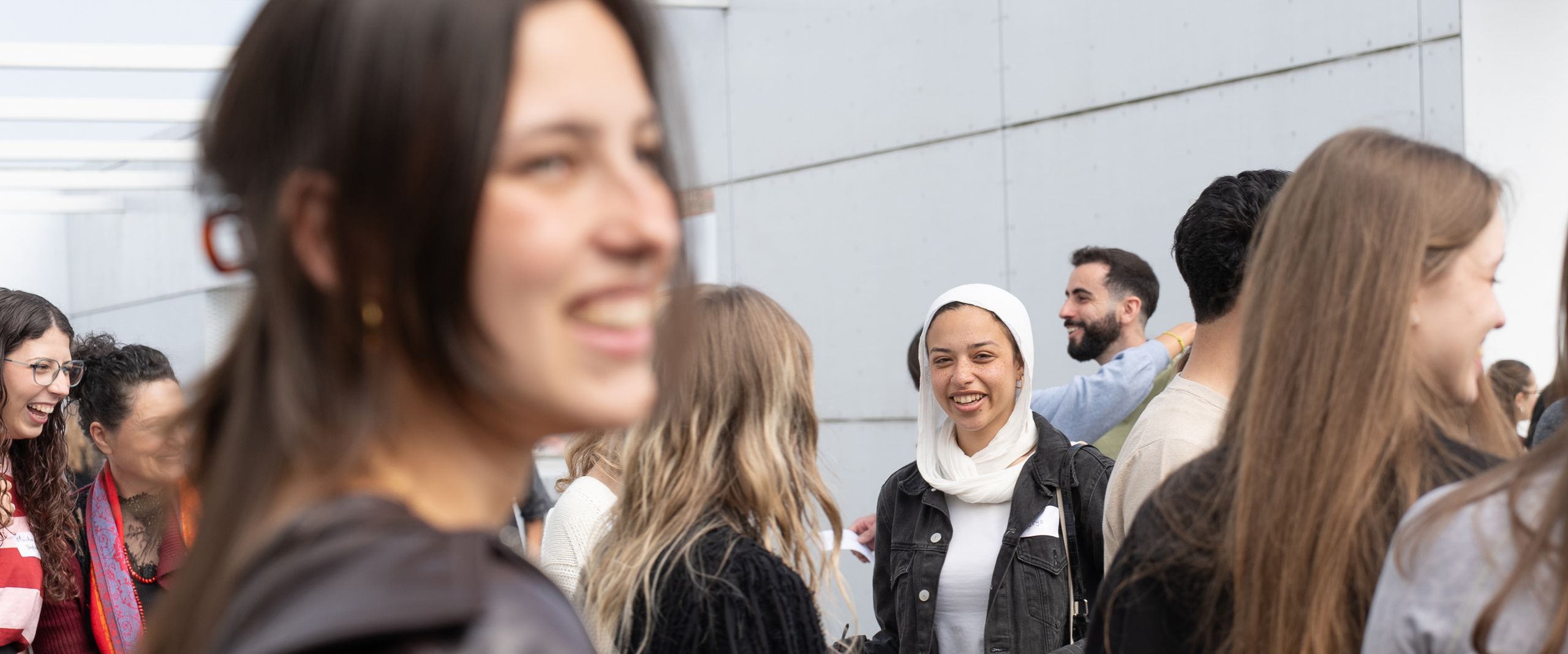
A key component of the project was a one-week blended intensive programme organised as part of the STARS EU university alliance, in which students from all nine partner universities, including Hochschule Bremen - City University of Applied Sciences, took part. During this week and throughout the rest of the semester, the students worked together in international and interdisciplinary teams. The programme was supported by staff from the nine partner universities, including Jacinta Costa from Bragança Polytechnic University in Portugal, Anissa Bellil from Marie and Louis Pasteur University in France, Dana Chlupová and Jana Orlová from the Silesian University in Opava in the Czech Republic, Lizanne Hendriks-Winter from Hanze University of Applied Sciences in the Netherlands, Cintia Hernández Sánchez and Jesús de las Heras from the University of La Laguna in Spain, and Mirseda Shehdulla Plaku, Teuta Thanasi and Megi Spahiu from Aleksandër Moisiu University of Durrës in Albania.

Prof. Maria Petra Clarke
Building Construction
+49 421 5905 2767
Email

Janina Ebner
STARS EU | Co-Creation Campus
+49 421 5905-2381
Email