As part of the STARS-EU project “Ou(te)r Campus – European Campus, A Living Lab”, five international and interdisciplinary teams of students presented their ideas for a European campus of the future. The concepts developed by the nearly 40 students range from digital applications for socialising and networking on campus to a digital and physical exchange platform. The INTEGRATE.EU project team received an award. It impressed the jury with a platform for cross-university and cross-national networking among students. The work of the five project groups was carried out this summer term as part of a blended intensive programme at the School of Architecture Bremen at Hochschule Bremen (HSB) - City University of Applied Sciences. The students also showcased their work in a special exhibition at the HSB.
During a final presentation at the end of the HSB’s summer semester, which was streamed online, the five project groups presented their ideas on how a European campus might be conceived, designed and tested in the future – digitally, physically, socially and spatially – to the university community and representatives from the other eight STARS EU partner universities. The concepts were assessed by a five-member jury comprising representatives from HSB and the partner universities from Albania, Spain and the Netherlands. An overview of the five projects:
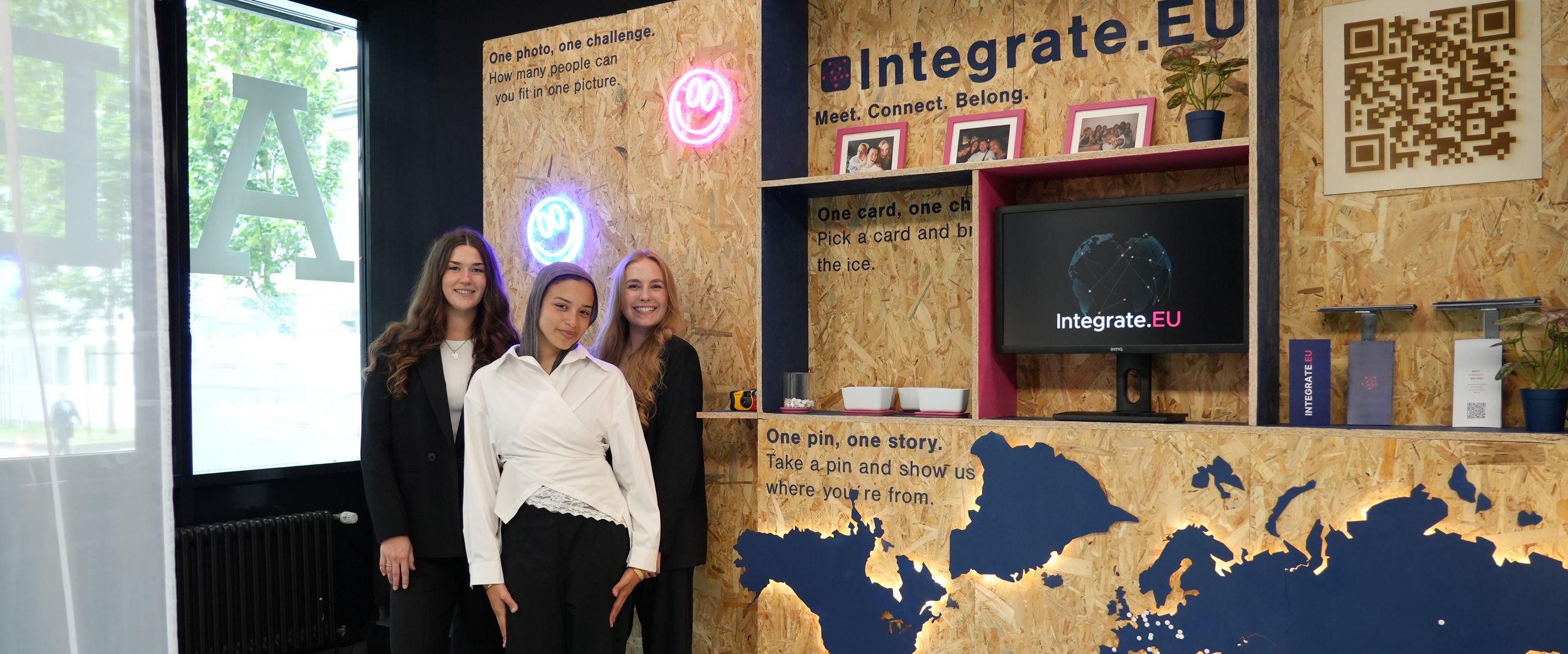
Moving to a new city or another country to study is an exciting experience. At the same time, it can be a challenge to make friends and settle into a new community. This is exactly where INTERGRATE.EU comes in: the digital platform connects students across universities and national borders and promotes exchange within Europe.
The app combines personalised profiles, an interactive map, campus events and networking features. This enables students to discover shared interests, make new friends and expand their network. Social and sporting challenges encourage participation in campus life and bring local and international students together.
By combining networking, community activities and cross-campus collaboration, INTEGRATE.EU strengthens cultural exchange and fosters a sense of belonging to a European higher education community.
Team: Daliya Aly (Misr International University (MIU), Egypt) and Lea Sirtl (Bremen University of Applied Sciences, Germany), Hanna Troeger (Hochschule Bremen - City University of Applied Sciences, Germany) , Gautier Cadot (Université Marie et Louis Pasteur, France), Tinguaro Zarzuela Herrera (University of La Laguna, Spain), Jesper Lindqvist (University West, Sweden), Marcel Kuipers (Hanze University of Applied Sciences, Netherlands) , Antonio Afonso Pires (Polytechnic Institute of Bragança, Portugal)
STARSCAPE creates new opportunities for exchange and collaboration between the STARS-EU partner universities. At its heart is a digital platform that makes it easier for students, PhD candidates and teaching staff with similar interests, topics or questions to connect with one another.
Via the website, they can network, ask questions about everyday university life, discover events, find PhD opportunities and book rooms or meeting places. The platform is complemented by a portable wooden box containing tables, seat cushions, lighting and other modular elements, which can be flexibly set up across the campus.
In this way, STARSCAPE becomes a hybrid meeting place: digital, to highlight suitable contacts, and physical, to make exchange, collaboration and interaction a concrete reality.
Team: Hamza Ferchichi (Hochschule Bremen . City University of Applied Sciences, Germany), Davide Callegaro (University of Ferrara, Italy), Silvia Baraldi (University of Ferrara, Italy), Nellie Dahlström (University West, Sweden), Tomáš Svoboda (Silesian University in Opava, Czech Republic), Sebastián García Marulanda (University of La Laguna, Spain), Julia Łuczak (Cracow University of Technology, Poland), Joanna Możdżeń (Cracow University of Technology, Poland)
RE-LAY combines a modular exchange point on campus with a digital platform, thereby promoting sustainability, community and interaction amongst students. The exchange station, featuring open shelves and lockable compartments, enables the sharing and secure borrowing of everyday items. Via the platform, students can find and reserve items, and discover exchange stations at other STARS-EU universities. In this way, RE-LAY transforms unused items into shared resources and reinforces the concept of a connected European campus.
Team: Magdalena Ptasznik (Cracow University of Technology, Poland), Katharina Sager and Laura Naujocks (Hochschule Bremen (HSB) - City University of Applied Sciences, Germany), Julia Gągała, Maja Mielczarek and Svitlana Rakuta (Cracow University of Technology, Poland), Catarina Goncharova and Patrícia Costa (Polytechnic Institute of Bragança, Portugal)
GROWING TREE creates a hybrid network for students, combining digital networking with a physical meeting place on campus. The project addresses the challenge of student isolation – particularly amongst first-year and international students – and provides accessible opportunities to make contacts, get involved in activities together and feel part of a European campus community.
Through the platform, students can discover activities, join communities, exchange knowledge and launch their own initiatives. The ‘tree’ grows alongside its users: new communities become branches, whilst shared activities and encounters become leaves. The digital aspect is complemented by a permanent meeting space on campus, which serves as an open hub for exchange, learning and joint events.
In this way, GROWING TREE brings the European campus to life in everyday life – as a vibrant ecosystem, co-created by students, fostering a sense of belonging, intercultural exchange and shared experiences.
Team: Livia Marie De Lima Barreto Xavier (Federal University of Paraíba (UFPB), Brazil), Oscar Llamero Becerra (Rey Juan Carlos University, Spain), Laura Neumann (Hochschule Bremen -City University of Applied Sciences, Germany), Joana Beatriz Teixeira de Sousa (Polytechnic Institute of Bragança, Portugal), Martina Čichoňová (Silesian University in Opava, Czech Republic), Deniz Nunez Deveci (University West, Sweden), Anaïs Vincent (Université Marie et Louis Pasteur, France)
STARS EU Week brings the European higher education network STARS EU to life on campus. Through a modular travelling exhibition, it provides information about the partner universities and what they have to offer, whilst sparking interest in the opportunities presented by the alliance.
The concept is complemented by the ‘Higher Education Compass’, a permanent campus installation providing information on the STARS EU partner universities. In this way, the project enhances the network’s visibility and raises awareness of the European higher education community.
Team: Athanasios Kalaitzis (Hochschule Bremen - City University of Applied Sciences, Germany), Gerwin Meindertsma (Hanze University of Applied Sciences, Netherlands), Malak Salama (Misr International University (MIU), Egypt), Eliza Hala (Cracow University of Technology, Poland), Lule Hoxha (University of Durrës, Albania) , Natalia Szczepańska (Cracow University of Technology, Poland), Cláudia Baptista (Polytechnic Institute of Bragança, Portugal)
The ‘Ou(te)r Campus – European Campus, A Living Lab’ project is based at the School of Architecture within Faculty 2 – Architecture, Construction and Environment at the HSB and was offered as a Master’s module this summer term. It is based on the teaching and research format known as ‘Interspace’, which was conceived, developed and established over several years by Professor Ulrike Mansfeld and emerged from a collaboration between the University of the Arts Bremen and Bremen University of Applied Sciences. As part of the STARS EU project, this format was further developed this year by Janina Ebner and Professor Maria Clarke and adapted to address the concept of a European campus as a living lab. A key component of the project was a one-week blended intensive programme organised as part of the STARS EU University Alliance, in which students from all nine partner universities, including HSB, took part. It was funded under the Erasmus+ programme.
The module was also supported this summer term by lecturers Aintzane del Río Pereda, Johanna Hannemann and Carolina Bergedieck. The five concepts developed are to be pursued further within the framework of STARS EU and assessed for their feasibility.
“A European campus is not created simply through digital networking, but through encounters, collaboration and the exchange of different perspectives. Ou(te)r Campus demonstrates how international teaching can become an experimental space for research and design,” said Professor Maria Clarke.
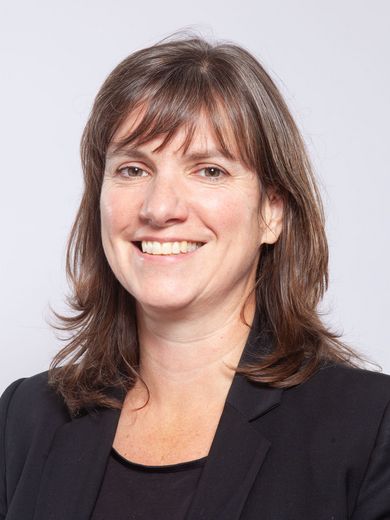
Prof. Maria Petra Clarke
Building Construction
+49 421 5905 2767
Email
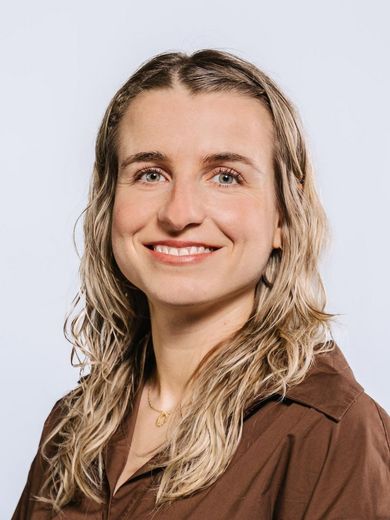
Janina Ebner
STARS EU | Co-Creation Campus
+49 421 5905-2381
Email