Jump directly to the page content
  • AULIS
  • CampInO
  • Webmail
  • Wi-Fi (eduroam)
  • Change password
  • Semester Dates
  • Account Activation
  • Prospective students For prospective students
  • First-semester students For first-semester students
  • International Students
  • Press and media For press and media
  • Job seekers
  • DE
  • Dark Mode
  • Experience studying
    • Programmes
      • Bachelor
      • Master
      • International MBA & Master
    • Before your studies
      • Step by step to university
      • Orientation for prospective students
      • Application and admission
      • International applications
    • During your studies
      • First-semester students
      • Semester dates
      • Logins and portals
      • Formalities
      • Going abroad
      • Complementary offers for students
    • After your studies
      • Master's degree programmes
      • Career perspectives
      • Continuing education
      • Information for Alumni
      • Doctorates
    • All about studying
      • Student life
      • Student participation
      • Healthy through your studies
      • Mensa, canteens and cafeterias
      • Culture
      • Sports
    • Advice and support
      • Central Student Advisory Service
      • Doubting Your Studies
      • Finances
  • Experience research
    • Research and transfer profile
      • Strategic partnerships
      • Institutes
      • Research projects
    • Research and transfer clusters
      • Blue Sciences
      • Digital transformation
      • Quality of life
      • Aerospace
    • Early career researchers
    • Transfer and cooperation
    • Research Services
    • Start-up service & FreiRAUM@HSB
      • Makerspace
  • Experience continuing education
  • Experience HSB
    • News
      • Press Releases
      • News Items
      • Events
    • Faculties
      • School of International Business
      • School of Architecture, Civil and Environmental Engineering
      • School of Social Sciences
      • School of Electrical Engineering and Computer Science
      • School of Nature and Engineering
    • Organisation
      • University Management
      • Administration
      • Central Units
      • Inter-university units
      • Committees and representation of interests
    • Our profile
      • Mission Statement
      • Internationality
      • Equality
      • Diversity
      • Sustainability at HSB
      • Hochschule Bremen at a glance
      • History
    • Working at HSB
      • Get to know HSB
      • We are HSB!
      • UAS professorship
      • Job offers
      • Your application to HSB
      • Contact and advice
      • Any further questions?
    • Staff
    • AULIS
    • CampInO
    • Webmail
    • Wi-Fi (eduroam)
    • Change password
    • Semester Dates
    • Account Activation
    • Prospective students For prospective students
    • First-semester students For first-semester students
    • International Students
    • Press and media For press and media
    • Job seekers
  • DE
  • Dark Mode
Experience studying
  • Programmes
    • Bachelor
    • Master
    • International MBA & Master
  • Before your studies
    • Step by step to university
    • Orientation for prospective students
    • Application and admission
    • International applications
  • During your studies
    • First-semester students
    • Semester dates
    • Logins and portals
    • Formalities
    • Going abroad
    • Complementary offers for students
  • After your studies
    • Master's degree programmes
    • Career perspectives
    • Continuing education
    • Information for Alumni
    • Doctorates
  • All about studying
    • Student life
    • Student participation
    • Healthy through your studies
    • Mensa, canteens and cafeterias
    • Culture
    • Sports
  • Advice and support
    • Central Student Advisory Service
    • Doubting Your Studies
    • Finances
Experience research
  • Research and transfer profile
    • Strategic partnerships
    • Institutes
    • Research projects
  • Research and transfer clusters
    • Blue Sciences
    • Digital transformation
    • Quality of life
    • Aerospace
  • Early career researchers
  • Transfer and cooperation
  • Research Services
  • Start-up service & FreiRAUM@HSB
    • Makerspace
Experience continuing education
Experience HSB
  • News
    • Press Releases
    • News Items
    • Events
  • Faculties
    • School of International Business
    • School of Architecture, Civil and Environmental Engineering
    • School of Social Sciences
    • School of Electrical Engineering and Computer Science
    • School of Nature and Engineering
  • Organisation
    • University Management
    • Administration
    • Central Units
    • Inter-university units
    • Committees and representation of interests
  • Our profile
    • Mission Statement
    • Internationality
    • Equality
    • Diversity
    • Sustainability at HSB
    • Hochschule Bremen at a glance
    • History
  • Working at HSB
    • Get to know HSB
    • We are HSB!
    • UAS professorship
    • Job offers
    • Your application to HSB
    • Contact and advice
    • Any further questions?
  • Staff
  1. Homepage
  2. HSB
  3. Faculties
  4. School of Nature and Engineering
  5. Biomimetics-Innovation-Centre (B-I-C)

Biomimetics-Innovation-Centre (B-I-C)

The entire range of biomimetic activities under one roof

About the Institute

Since its foundation in 2005 the B-I-C has been coordinating research activities in the fields of basic and applied research and development. Furthermore the institute supports and facilitates technology transfer from science to industry, especially concerning the national and international networking of different actors in the environment of biomimetics. 

„For millions of years, nature has been providing solutions to key tasks such as transport, protection from danger, temperature regulation, energy supply and much more. Biomimetics looks at this pool of diverse, proven solutions and deciphers their operating principles. The ultimate goal is to solve problems for the technology of the future. In this way, biomimetics opens up new avenues for sustainable, resource-saving and climate-friendly products and processes.“

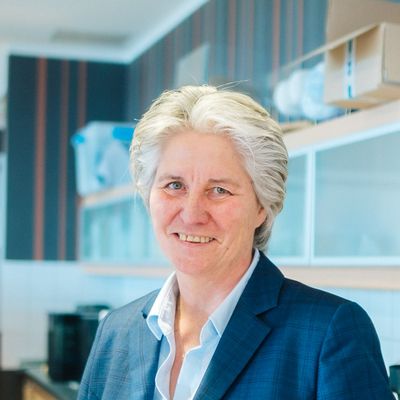
Prof. Dr. Antonia Kesel Head of B-I-C & Programme director: International Study Course Biomimetics (B. Sc.) Biomimetics: Mobile Systems (M.Sc.)

Main research topics

Biomimetic research takes place in close cooperation between diverse disciplines. Therefore, the research teams at the B-I-C are multidisciplinary and cooperate in the field of R&D at both national and international level with companies and institutions from a wide range of fields. The aim is to gain new insights in the respective research areas and to translate these into innovative technologies through application-oriented research.

Fluid dynamics

Air and water currents have a significant impact on the performance of technical systems. Shape and surface structure determine drag, lift and energy efficiency. Nature offers a multitude of optimised solutions for this – from friction-reducing microstructures to streamlined wing geometries.

Fluid dynamics is therefore a key research focus at the B-I-C. Biological models such as shark skin, salvinia and insect wings serve as inspiration for systematically analysing efficient principles and transferring them to technical applications.

Both experimental investigations in the aerodynamics and hydrodynamics laboratories and numerical simulations using computational fluid dynamics (CFD) are used. On this basis, the B-I-C develops innovative, flow-optimised solutions for a wide range of applications – from surface structures to bio-inspired drive concepts.

Locomotion

Biological organisms move around in a wide variety of habitats with high efficiency, adaptability and minimal energy consumption. Their locomotion strategies – from running and climbing to swimming and flying – provide valuable models for innovative technical drive and mobility systems.

At the B-I-C, these principles are systematically investigated and transferred to applications in robotics, vehicle technology and autonomous systems. A particular focus is on locomotion in air and water, for example on bio-inspired wings, lightweight structures and energy-efficient drive concepts.

Experimental motion analyses and state-of-the-art simulations form the methodological basis for precisely capturing biological strategies and translating them into powerful, resource-efficient technologies.

Functional surfaces

Biological surfaces have diverse, highly functional properties and offer great potential for innovative and sustainable technical applications. At the B-I-C, the surfaces and interfaces of marine organisms are studied in particular in order to understand natural adhesion, bonding and flow mechanisms and transfer them to technical systems.

The focus is on multifunctional surfaces with properties such as self-cleaning, friction reduction, protective and insulating functions, and targeted adhesion. These principles serve as the basis for the development of high-performance material and surface concepts.

Recent research has included bio-inspired antifouling solutions, adhesive-free adhesion systems and air-trapping surfaces for friction minimisation – for example, for ship hulls in the EU project AIRcoat or pipe systems in the BMBF project AIRtube.

Lightweight construction, design & optimisation

Biological structures combine high load-bearing capacity with minimal use of materials and are therefore considered natural models for efficient lightweight construction concepts. At the B-I-C, these principles are systematically analysed in order to develop robust, resource-saving and high-performance components for technical applications.

With the aid of numerical simulations and structural mechanical optimisation methods, natural design strategies – such as the growth and adaptation processes of trees or bones – are abstracted and transferred to technical systems. Methods such as computer-aided optimisation (CAO) and structural-constructive optimisation (SKO) enable significantly lighter structures with the same or higher load-bearing capacity.

Biological Structures and Biomechanics

The Biological Structures and Biomechanics working group focuses its research on the arthropod cuticle as a versatile biological composite material. The focus is on its biological function, its microscopic mechanics and the development of novel, cuticle-inspired materials using nanotechnology. The multi-layered structure of the cuticle provides important insights for the design of modern fibre composites and impact-resistant lightweight structures – with potential applications ranging from aerospace to industrial product and packaging technology.

Biological Materials

The Biological Materials working group researches bio-inspired, biomimetic and bio-based materials as well as the entire value chain of natural fibres and fibre-reinforced composites. The aim is to understand the structure-property relationships of biological and technical materials and to use this knowledge to develop sustainable, high-performance products.

Organisation & Logistics

Proven principles of biological systems can be applied to business issues in organisation, production and logistics. In close cooperation with industry partners, we analyse natural strategies for efficiency, resilience, self-organisation and adaptive control and make this potential available to companies in a targeted manner.

Biological models show how complex processes can be coordinated in a stable and efficient manner through decentralised decision-making structures, robust communication and flexible workflows. We transfer these mechanisms to production processes, internal communication structures and national and global supply chains with the aim of making processes more efficient, resilient and resource-efficient.

In successful industrial collaborations – including with the company Tchibo – bionic methods have been directly translated into concrete operational measures. The process model developed jointly at the B-I-C now serves as a practical guide for further projects aimed at the sustainable optimisation of organisational and logistics processes.

Contact

Institute Director

Prof. Dr. Antonia Kesel
+49 421 5905 2731
Email

Postal address

Biomimetics-Innovation-Centre

Bremen University of Applied Sciences

Prof. Dr. Antonia B. Kesel

Neustadtswall 30

28199 Bremen

Germany

Visiting address

Biomimetics-Innovation-Centre

Bremen University of Applied Sciences

Hermann-Köhl-Straße 1

28199 Bremen

Germany
External Website of B-I-C

  • External Website of B-I-C
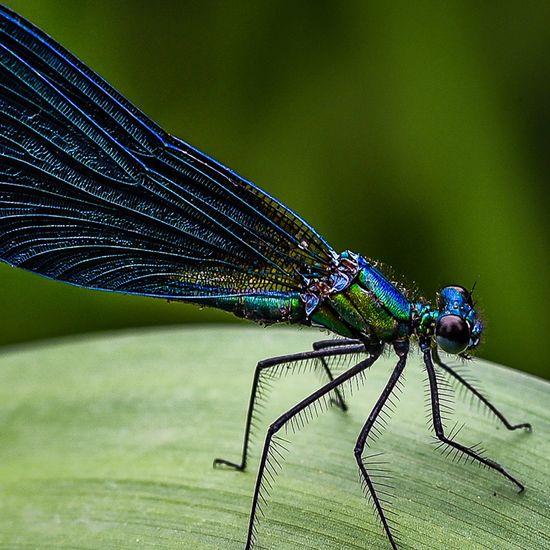
Kleinlibelle auf einem Blatt
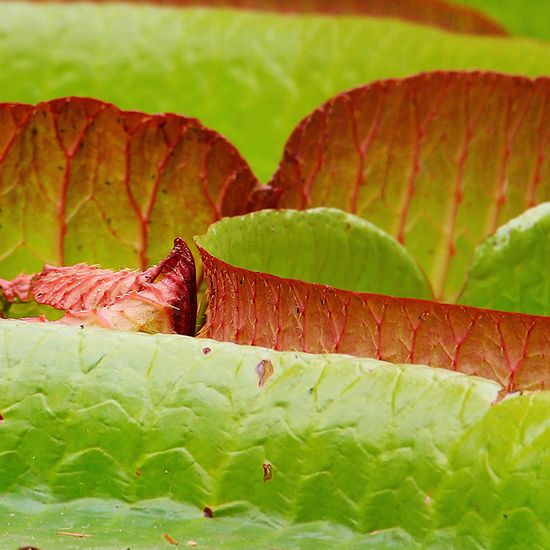
Blattkante eines Seerosenblattes
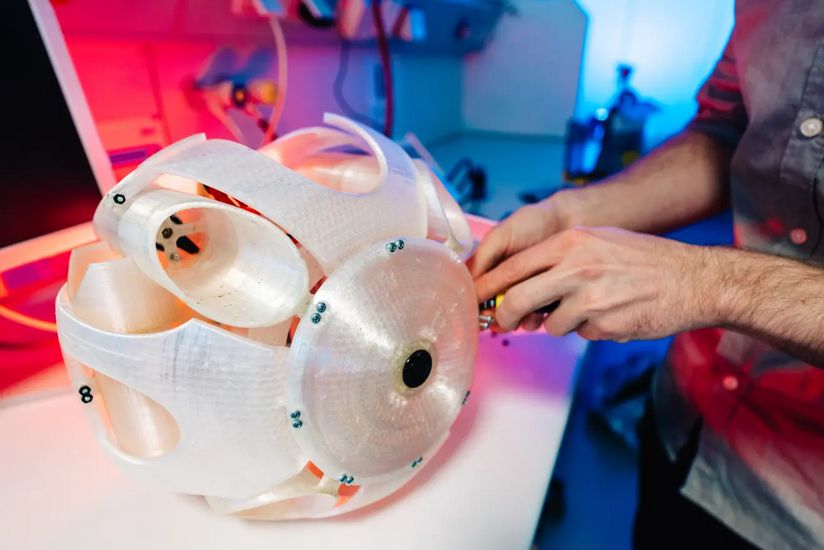
InnoWi Erfindung Exoskelett Drohne
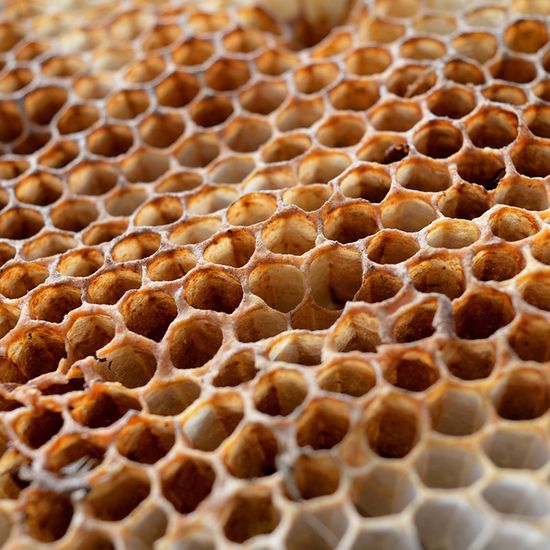
Bienenwaben
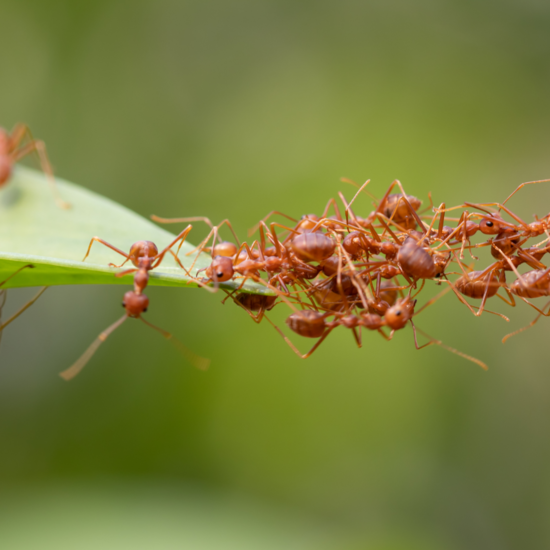
Soziale Ameisen bauen eine Ameisenbrücke von einer Blattspitze aus.
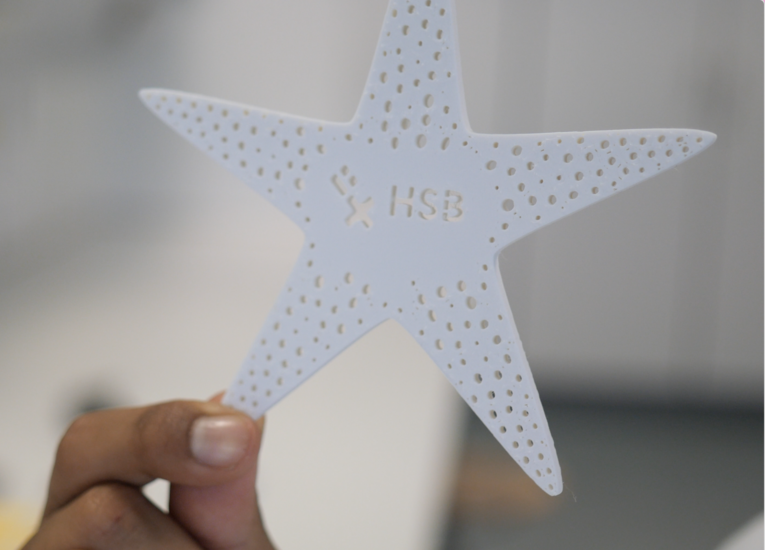
Auf dem Bild ist ein weißer Seestern zu sehen. Es ist kein echter Seestern, sondern besteht aus dem neu erfundenen Material. Der Seestern ist weiß, in der Mitte ist das HSB Logo zusehen und bei den einzelnen Zacken sind Löcher eingestanzt.

Cooperation and Networking

The Biomimetics-Innovation-Centre is a member of the German Biomimetics Network of Excellence e. V. (BIOKON). Several projects of the institute are integrated in action groups of the German government, the European Union and the Deutsche Bundesstiftung Umwelt DBU. Moreover, the B-I-C is involved in the professional association “Technologies of Life Sciences (TLS)” of the Association of German Engineers (VDI) and in the Society for Technical Biology & Biomimetics (GTBB e.V.).

Since 2003 already the biomimetics course programme is part of the course offer of the Bremen University of Applied Sciences. By then the first of its kind worldwide, the programme is outstanding on the German and international education and training landscape. The master degree programme Biomimetics: Motion Systems (3 terms, M.Sc.) is a follow-up to the International Bachelor's degree in Biomimetics / Bionik (ISB) (7 terms, B.Sc.).

In 2022, two biomimetic-hackathons were held at the B-I-C in cooperation with BIOKON e.V. and cooperation partners from industry.

The Biomimetics-Team

Five professors and around 20 staff members form the heart of Biomimetics in Bremen. Together, they develop new ideas, advance research, support students and ensure that Biomimetics is brought to life in a practical way.

  • Prof. Dr. Antonia Kesel
    +49 421 5905 2731
    Email

    Porträtfoto Albert Baars

    Prof. Dr. Albert Baars
    +49 421 5905 2749
    Email

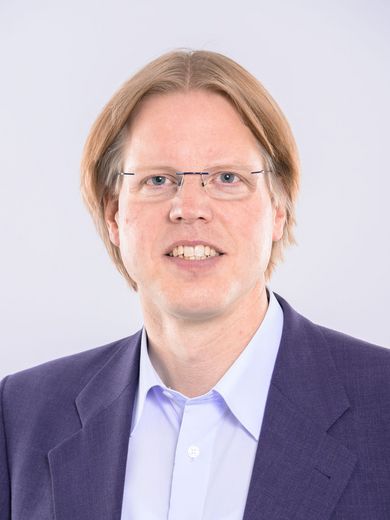
    Porträtfoto Jan-Henning Dirks

    Prof. Dr. Jan-Henning Dirks
    Professor Biological Structures and Biomimetics
    +49 421 5905 6010
    Email

    Prof. Dr.-Ing. Susanna Labisch
    +49 421 5905 2926
    Email

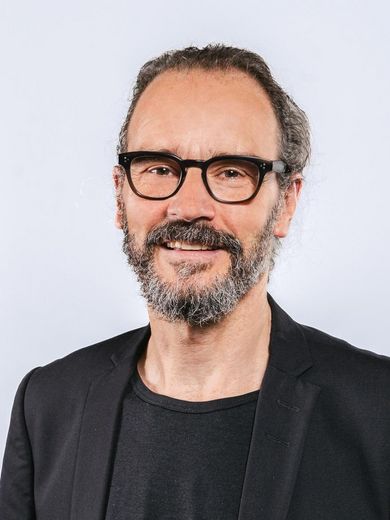
    Auf dem Bild ist Jörg Müssig zusehen. Er hat schwarz-grau meliertes Haar und Bart und trägt eine schwarze Brille und ein schwarzes T-Shirt unter einem schwarz Jackett.

    Prof. Dr.-Ing. Jörg Müssig
    +49 421 5905 2747
    Email

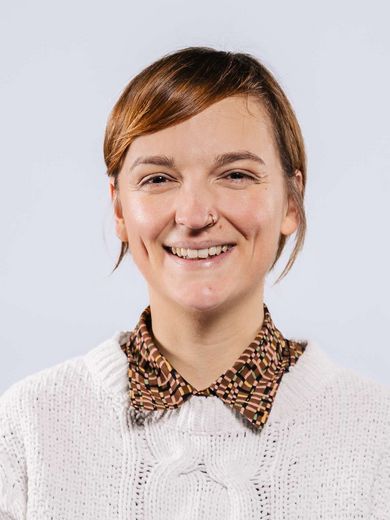
  • Auf dem Bild ist Lisa Kleiber zusehen. Sie hat ihr rotes Haar locker zusammengebunden. Sie trägt eine braungemusterte Bluse unter einem weißen Strickpullover.

    Lisa Kleiber
    +49 421 5905 2525
    Email

  • Venkata Rajasekhara Reddy Bade
    +49 421 5905 6015
    Email

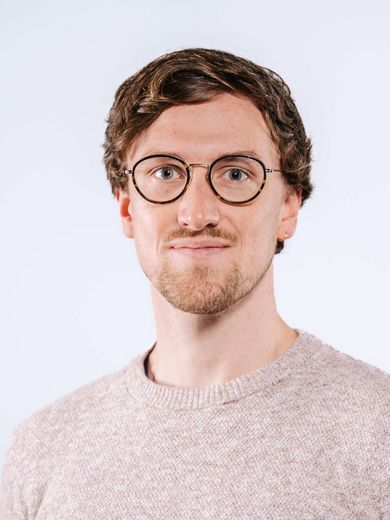
    Auf dem Bild ist Jonas-Rumi Baumann zusehen. Er hat braunes, welliges Haar und trägt eine dunkle runde Brille und einen rosanen Pullover.

    Jonas-Rumi Baumann
    +49 421 5905 6028
    Email

    Porträtfoto Alexander Behrens

    Alexander Behrens
    +49 421 5905 6015 -3581
    Email

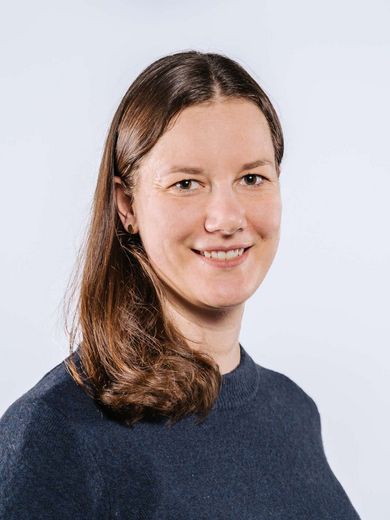
    Auf dem Bild ist Jessica Brüggebors zusehen. Sie hat schulterlanges, braunes Haar und trägt einen dunkelblauen Pullover.

    Jessica Brüggebors
    +49 421 5905-2523
    Email

    Porträtfoto Nina Graupner

    Dr.-Ing. Nina Graupner
    +49 421 5905 2719 -3560
    Email

    Porträtfoto Florian Hoffmann

    Dipl.-Ing. (FH) Florian Hoffmann
    +49 421 5905 2593
    Email

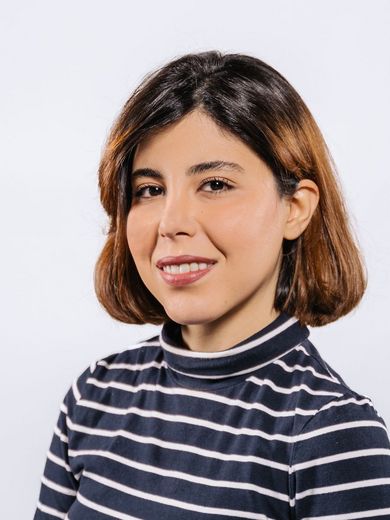
    Auf dem Bild ist Hiva Hormozi zu sehen. Sie hat braunes, kinnlanges Haar und trägt ein blaues Shirt mit weißen Streifen.

    Hiva Hormozi
    Email

    Porträtfoto René Sonntag

    Dipl.-Biol. René Sonntag
    +49 421 5905 2507
    Email

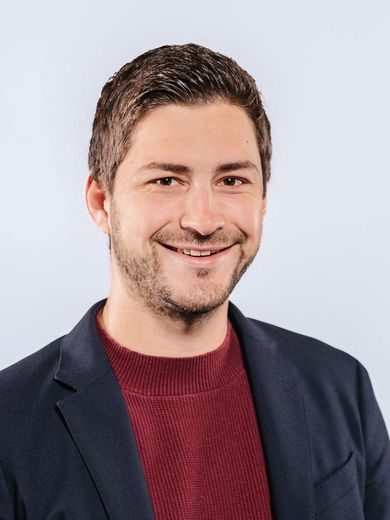
    Auf dem Bild ist Jonas Unterholzner zusehen. Er hat braune Haare und einen Dreitagebart. Er trägt einen dunkel roten Pullover unter einem dunkel blauen Jacket.

    Jonas Unterholzner
    PhD student - Fatigue and repair mechanisms in insect exoskeletons
    +49 421 5905 4150
    Email

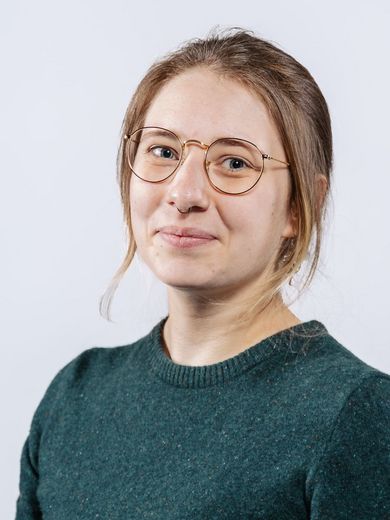
    Auf dem Bild ist Maria von Einem zu sehen. Sie trägt ihr braunes Haar locker zusammengebunden, eine Brille und einen dunkelgrünen Pullover.

    Maria von Einem
    +49 421 5905-2595
    Email

Visiting address

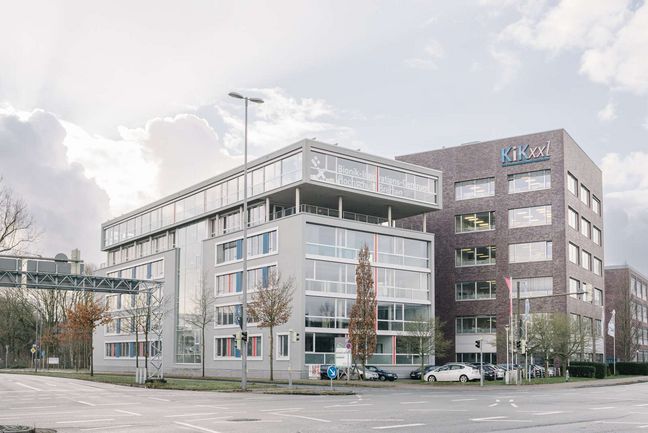
Außenansicht des HSB-Standortes in der Hermann-Köhl-Straße.

© HSB - Ana Rodríguez

The B-I-C of the Bremen University of Applied Sciences can be found near Bremen Airport on the 4th and 5th floor of the building (abbreviation: HK) with the address:

Hermann-Köhl-Straße 1
28199 Bremen

The large seminar rooms are also located here and many of the lectures of the Biomimetics study program are held here. Also on site are some laboratories (e.g. computer labs, 3-D printing line). Other laboratories (e.g. materials) are located in the buildings at Neustadtswall.

  • Visit our Instagram profile Visit our Instagram profile
  • Visit our Facebook page
  • Visit our YouTube channel
  • Visit our Xing profile
  • Visit our LinkedIn profile
  • Contact
  • Cookies
  • Location and access
  • Career
  • Legal notice
  • Data privacy policy

© HSB - Hochschule Bremen 2026