Jump directly to the page content
  • AULIS
  • CampInO
  • Webmail
  • Wi-Fi (eduroam)
  • Change password
  • Semester Dates
  • Account Activation
  • Prospective students For prospective students
  • First-semester students For first-semester students
  • International Students
  • Press and media For press and media
  • Job seekers
  • DE
  • Dark Mode
  • Experience studying
    • Programmes
      • Bachelor
      • Master
      • International MBA & Master
    • Before your studies
      • Step by step to university
      • Orientation for prospective students
      • Application and admission
      • International applications
    • During your studies
      • First-semester students
      • Semester dates
      • Logins and portals
      • Formalities
      • Going abroad
      • Complementary offers for students
    • After your studies
      • Master's degree programmes
      • Career perspectives
      • Continuing education
      • Information for Alumni
      • Doctorates
    • All about studying
      • Student life
      • Student participation
      • Healthy through your studies
      • Mensa, canteens and cafeterias
      • Culture
      • Sports
    • Advice and support
      • Central Student Advisory Service
      • Doubting Your Studies
      • Finances
  • Experience research
    • Research and transfer profile
      • Strategic partnerships
      • Institutes
      • Research projects
    • Research and transfer clusters
      • Blue Sciences
      • Digital transformation
      • Quality of life
      • Aerospace
    • Early career researchers
    • Transfer and cooperation
    • Research Services
    • Start-up service & FreiRAUM@HSB
      • Makerspace
  • Experience continuing education
  • Experience HSB
    • News
      • Press Releases
      • News Items
      • Events
    • Faculties
      • School of International Business
      • School of Architecture, Civil and Environmental Engineering
      • School of Social Sciences
      • School of Electrical Engineering and Computer Science
      • School of Nature and Engineering
    • Organisation
      • University Management
      • Administration
      • Central Units
      • Inter-university units
      • Committees and representation of interests
    • Our profile
      • Mission Statement
      • Internationality
      • Equality
      • Diversity
      • Sustainability at HSB
      • Hochschule Bremen at a glance
      • History
    • Working at HSB
      • Get to know HSB
      • We are HSB!
      • UAS professorship
      • Job offers
      • Your application to HSB
      • Contact and advice
      • Any further questions?
    • Staff
    • AULIS
    • CampInO
    • Webmail
    • Wi-Fi (eduroam)
    • Change password
    • Semester Dates
    • Account Activation
    • Prospective students For prospective students
    • First-semester students For first-semester students
    • International Students
    • Press and media For press and media
    • Job seekers
  • DE
  • Dark Mode
Experience studying
  • Programmes
    • Bachelor
    • Master
    • International MBA & Master
  • Before your studies
    • Step by step to university
    • Orientation for prospective students
    • Application and admission
    • International applications
  • During your studies
    • First-semester students
    • Semester dates
    • Logins and portals
    • Formalities
    • Going abroad
    • Complementary offers for students
  • After your studies
    • Master's degree programmes
    • Career perspectives
    • Continuing education
    • Information for Alumni
    • Doctorates
  • All about studying
    • Student life
    • Student participation
    • Healthy through your studies
    • Mensa, canteens and cafeterias
    • Culture
    • Sports
  • Advice and support
    • Central Student Advisory Service
    • Doubting Your Studies
    • Finances
Experience research
  • Research and transfer profile
    • Strategic partnerships
    • Institutes
    • Research projects
  • Research and transfer clusters
    • Blue Sciences
    • Digital transformation
    • Quality of life
    • Aerospace
  • Early career researchers
  • Transfer and cooperation
  • Research Services
  • Start-up service & FreiRAUM@HSB
    • Makerspace
Experience continuing education
Experience HSB
  • News
    • Press Releases
    • News Items
    • Events
  • Faculties
    • School of International Business
    • School of Architecture, Civil and Environmental Engineering
    • School of Social Sciences
    • School of Electrical Engineering and Computer Science
    • School of Nature and Engineering
  • Organisation
    • University Management
    • Administration
    • Central Units
    • Inter-university units
    • Committees and representation of interests
  • Our profile
    • Mission Statement
    • Internationality
    • Equality
    • Diversity
    • Sustainability at HSB
    • Hochschule Bremen at a glance
    • History
  • Working at HSB
    • Get to know HSB
    • We are HSB!
    • UAS professorship
    • Job offers
    • Your application to HSB
    • Contact and advice
    • Any further questions?
  • Staff
  1. Homepage
  2. Study
  3. Biomimetics: Mobile Systems M.Sc.
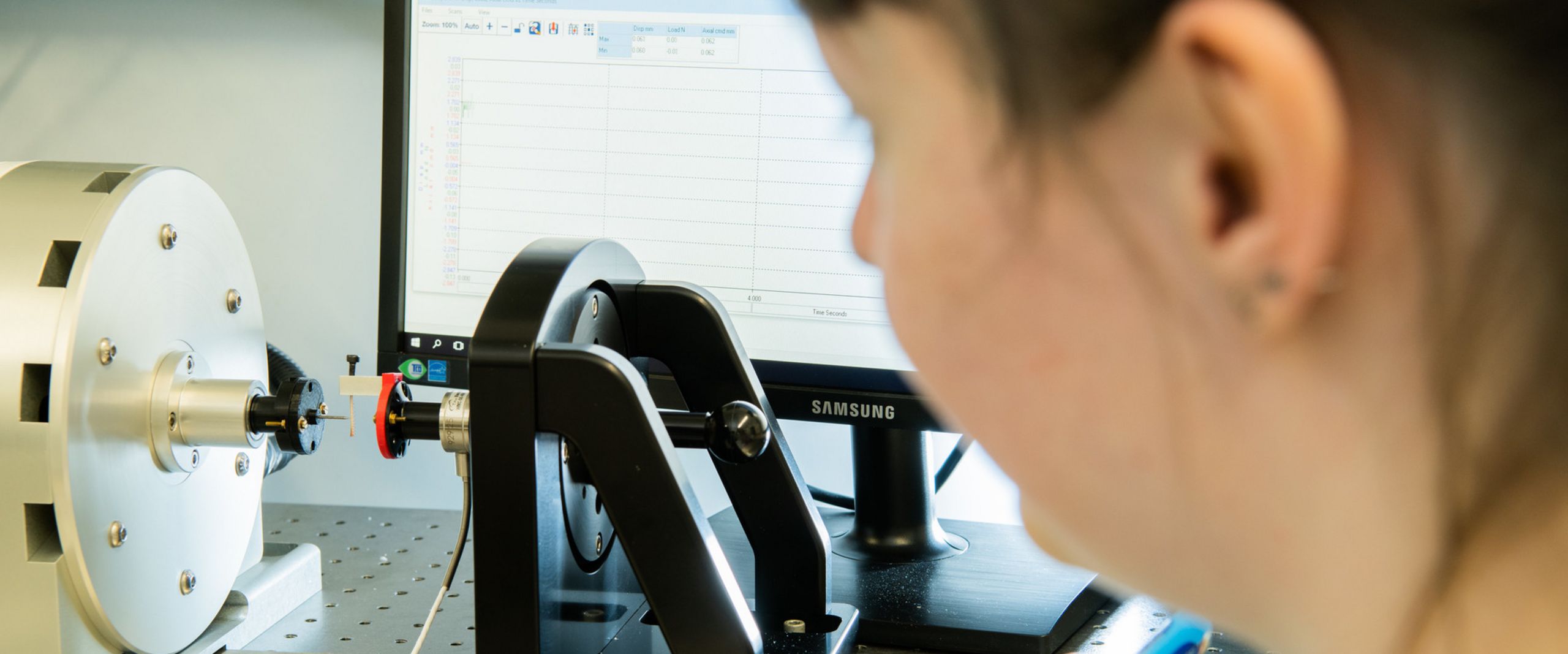
Eine Forscherin beobachtet einen Belastungsversuch mit einem Heuschreckenbein. Im Hintergrund steht ein Computerbildschirm.
© Hochschule Bremen - Marcus Meyer

School of Nature and Engineering

Biomimetics: Mobile Systems M.Sc.

Overview

Degree Master of Science
Start of study Winter semester, Summer semester
Application period Winter semester 01 June until 15 July
Application period Summer semester 15 December until 15 January
Standard period of study 3 semesters
Credits 90
Accredited

Yes

Admission restricted Yes
Admission requirements
  • Relevance of the first degree: Study components in the fields of biology, bionics, computer science, mechanics, technical physics, CAD, FEM, e.g. acquired in studies of biology, bionics, physics, mechatronics, fluid mechanics, materials engineering or mechanical engineering
  • Proof that the first degree was assessed with an average grade of at least ‘good’ (2.5) or an ECTS grade A to B
  • Graded work amounting to at least 210 points according to ECTS or equivalent achievements in comparison with the respective national grading system
  • Submission of relevant information on the programme of the first degree (diploma supplement), if it is not a programme offered by Hochschule Bremen
Language of instruction German
Faculty/institution School of Nature and Engineering
Integrated stay abroad No

In the master's programme in Biomimetics: Mobile Systems, you will acquire a broad range of methods for analysing biological movement systems and transferring their principles to modern mobility solutions. You will deepen your knowledge of animal locomotion (running, swimming, flying), aerodynamics and hydrodynamics, as well as engineering and fluid mechanics processes.

You will combine experimental and simulation methods to develop innovative concepts for the future, for example. A wide range of different laboratories and measuring instruments are available for this purpose, such as

  • body tracking
  • high-speed analysis
  • digital particle velocimetry (DPIV)
  • computational fluid dynamics (CFD).


In addition to technical and methodological skills, teamwork, interdisciplinary exchange and practical experience – e.g. on excursions and in challenge-based learning – are specifically promoted.

The programme is designed to last three semesters and concludes with a Master's thesis, which can be written in collaboration with renowned partners from research and industry in Germany or abroad.

Zwei bunte Strelitzienblüten, je eine nach rechts und nach links zeigend.

„For me, the module handbook covers three essential areas: technology, biology and fluid mechanics. I took the step from shipping to biomimetics – and it's been a fantastic experience!“

Hannes BMS Student

From sea turtle to underwater robot

An underwater robot inspired by sea turtles illustrates the aim of the Master's programme in Biomimetics: Mobile Systems: practical methodological knowledge and interdisciplinary skills for the development of innovative and sustainable mobility systems.

The protection of your data is important to us!

Based on the cookie settings you have chosen, we have blocked the connection to the provider of this content. If you would like to see the content embedded here, activate the "YouTube" category in the cookie settings.

Final project turtle

This project exemplifies the focus of the master's program "Bionics: Mobile Systems".

  • External website of the master's programme Biomimetics: Mobile Systems

Programme structure

Movement is one of nature's most fascinating achievements: animals run, jump, swim or fly with great efficiency and adaptability. The Master's programme in Biomimetics: Mobile Systems is dedicated to understanding these biological principles of movement and their transfer to technical applications. Among other things, the programme focuses on the biomechanical, physical and neurobiological foundations of locomotion. Students learn to precisely record movement sequences, describe them physically and interpret them biomechanically – both on solid ground and in air and water. This is rounded off with the fluid mechanics of flying and swimming – from buoyancy and drag to unsteady effects. Students learn state-of-the-art simulation techniques for analysing complex movement and flow processes, e.g. in computational fluid dynamics (CFD) and they deepen their knowledge of numerical flow simulation.

Movement is one of nature's most fascinating achievements: animals run, jump, swim or fly with great efficiency and adaptability. The Master's programme in Biomimetics: Mobile Systems is dedicated to understanding these biological principles of movement and their transfer to technical applications. Among other things, the programme focuses on the biomechanical, physical and neurobiological foundations of locomotion. Students learn to precisely record movement sequences, describe them physically and interpret them biomechanically – both on solid ground and in air and water. This is rounded off with the fluid mechanics of flying and swimming – from buoyancy and drag to unsteady effects. Students learn state-of-the-art simulation techniques for analysing complex movement and flow processes, e.g. in computational fluid dynamics (CFD), they deepen their knowledge of numerical flow simulation.

The Master's programme is divided into five modules in both the first and second semesters. In the third semester, the main focus is on writing the Master's thesis as the final project. In addition to classroom hours in the form of lectures and practical courses, two-thirds of the coursework is completed through self-study.

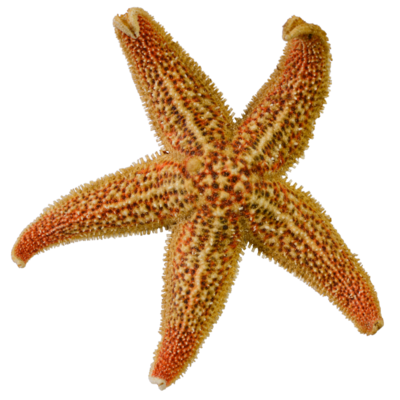
Fünfarmiger orangener Seestern

„After completing my bachelor's degree in electrical engineering, I wanted to continue working with simulations. I really enjoyed the fluid mechanics and CFD aspects of the programme, and the projects give you a lot of freedom while still providing support from the professors.“

Leon BMS Student

Module manual (German)

  • Modulhandbuch Bionik Master (PDF, 721 KB, File does not meet accessibility standards)

Examination regulations (German)

  • MPO Bionik - mobile Systeme (PDF, 568 KB, File does not meet accessibility standards)
  • MPO Bionik: Mobile Systeme ABl. 2014 (PDF, 241 KB, File does not meet accessibility standards)
  • MPO Bionik: Mobile Systeme Berichtigung ABl. 2014 (PDF, 296 KB, File does not meet accessibility standards)
  • General examination regulations for master degree programmes

Career prospects

Graduates of the Bionics Master's programme can choose from a wide spectrum of activities in all areas surrounding the research and development of innovative, sustainable technologies at the interface of future-oriented transport and mobility systems:

Future careers lie in the following areas, among others:

Occupational fields in the area of human machine interaction 

  • Power engineering 
  • Robotics 
  • Automotive industry  
  • Aerospace industry 
  • Subcontracting industry  
  • Engineering and design offices 
  • Research institutions of all kinds 

Doctoral programmes

The successful completion of the master's degree allows graduates worldwide access to doctoral programmes. At the B-I-C, for example, there is the possibility of a cooperative doctorate in collaboration with another university.

In addition, the B-I-C is part of the consortium of the EU-funded Nature4Nature programme, in which eight doctoral students are cooperatively investigating a project on filter mechanisms from different perspectives.

Internationality

A stay abroad is not compulsory, but is gladly supported.

Alle Partnerhochschulen der HSB

Cooperation partners

BIONIK-INNOVATIONS-CENTRUM (B-I-C) 

For almost 20 years, the B-I-C has been coordinating developments in basic and applied research. Furthermore, the Institute supports and moderates the transfer of technology from science to industry, not least within the framework of national and international networking with the diverse stakeholders in the field. Especially in the context of lifelong learning, the centre has also significantly expanded its activities in the area of further education.

  • External Website of the Bionik Innovation Centre (B-I-C)

Further cooperation partners

There are numerous contacts with national and international companies and institutions, such as:

  • Institut für Mikrosystemtechnik, Universität Bremen 
  • Robotics Innovation Center (RIC), Deutsches Forschungszentrum für künstliche Intelligenz (DFKI) GmbH, Bremen
  • Deutsche WindGuard Engineering GmbH, Bremerhaven
  • AWI Alfred-Wegener-Institut für Polar- und Meeresforschung, Bremerhaven
  • FG Biomechatronik, Institut für Mikrosystemtechnik, Mechatronik und Mechanik, TU Ilmenau 
  • FG Strömungstechnik und Akustik, FH Düsseldorf
  • Abteilung Biomechanik, Karlsruher Institut für Technologie (KIT) 
  • BIOROB, Biorobotics Laboratory, Ecole Polytechnique Federale de Lausanne (EPFL), CH
  • Université de Lorraine, Metz, F 
  • Biomimetics Group, Energy and Sustainability Research Institute, University of Groningen, NL 
  • Politecnico di Torino, Turin, IT
  • Structure and Motion Laboratory, Royal Veterinary College (RVC), University of London, UK 
  • The Fluid Dynamics Group, University of Oxford, UK
  • MITMECHE, Biomimetic Robotics Lab, Massachusetts Institute of Technology (MIT), Cambridge MA, USA 
  • CRAB Lab, Complex Rheology and Biomechanics, Georgia Institute of Technology, Atlanta GA, USA 
  • Lauder Laboratory, Harvard University, Cambridge MA, USA 
  • Biomedical Engineering, University of Cincinnati, Ohio, USA
  • Kyushu Institute of Technology, Fukuoka Prefecture, Japan

Application

  1. Information

    Check the application deadlines and admission requirements for your desired degree programme.

    Questions about the degree programme can be answered by the contact persons on the degree programme pages. If you have any further questions about your decision to study at HSB, our advisory and service institutions will be happy to help.
    • Advisory & Service at HSB
  2. Apply

    • Online application
    • International applications
  3. Admission and enrolment

    • Accepting a place and enrolling online
  4. Welcome to HSB!

    • Information on the start of studies

Contacts

Head of programme

Prof. Dr. Antonia Kesel
+49 421 5905 2731
Email

Application, admission, enrolment and examination matters

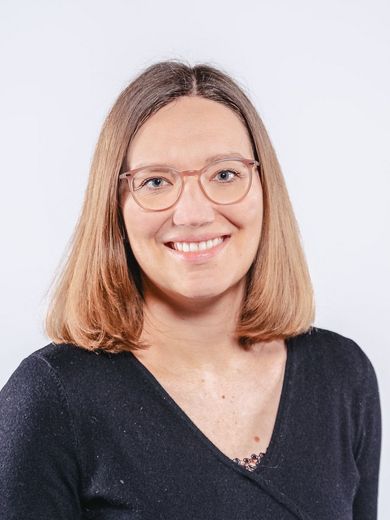
Auf dem Bild ist Laura Blanke zu sehen. Sie hat schulterlanges braunes Haar. Sie trägt eine Brille und ein schwarzes Oberteil.

Laura Blanke
+49 421 5905 2021
+49 176 1514 0242
Email

  • Visit our Instagram profile Visit our Instagram profile
  • Visit our Facebook page
  • Visit our YouTube channel
  • Visit our Xing profile
  • Visit our LinkedIn profile
  • Contact
  • Cookies
  • Location and access
  • Career
  • Legal notice
  • Data privacy policy

© HSB - Hochschule Bremen 2026