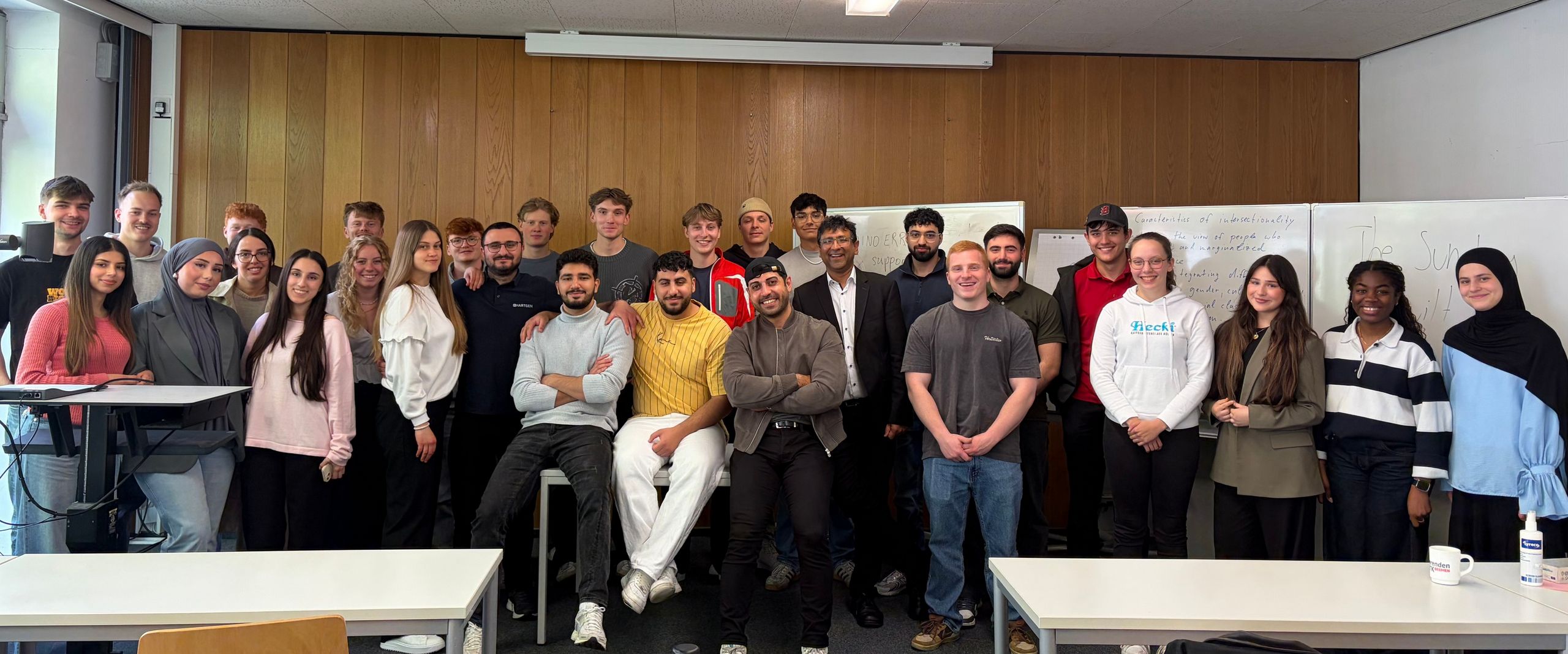
Fourth-semester students from the International Degree Programme in Industrial Engineering (ISWI) and the International Degree Programme in Global Management (ISGM) at Hochschule Bremen (HSB) recently took part in a practical training exercise to prepare for their upcoming semesters abroad. Rather than focusing solely on textbook theories, these future engineers analyzed and performed common cultural misunderstandings through a series of original one-act plays. Held on 20.05.2026 at Campus Werderstraße, the event was part of a Global Interactions collective initiative titled "What's Going on Here: Intercultural Situations through One-Act Plays."
The project benefited from a collaboration between different Hochschule Bremen (HSB) degree programmes. While the International Degree Programme in Industrial Engineering (ISWI) students performed the cultural friction points, students from International Degree Programme in Global Management (ISGM)'s module on cross-cultural-communication, led by Katrin Nissel, took on the roles of participatory observers and assessors.
The ISGM assessors evaluated each performance based on structured criteria, including real-life application, mastery of theoretical communication models, creative delivery, and audience interaction. This setup provided the performers with direct peer feedback on how effectively they communicated their strategies.
The planning and execution of the event came together with the support of Svenja Tams, who assisted the students in combining project management skills with intercultural communication techniques. To reinforce the educational value of the exercise, Svenja Tams, Katrin Nissel, and course coordinator Mayank Golpelwar provided scientific and practical feedback immediately following each act, and participatory intervention. This structured debriefing helped students connect the theatrical scenarios directly to real-life international challenges.
The nine ISWI student teams analyzed specific cross-cultural conflicts and presented concrete tools designed to resolve them, incorporating audience suggestions to test different results.
Nino Marseille, Lasse Habeck, Anina Heckmann, and Erik Losigkeit focused on classroom boundaries by examining an exam room misunderstanding where a simple request for a pen causes tension. They introduced a Cultural Rule-Finder Checklist designed to help individuals systematically scan and identify unwritten behavioral rules in a new environment.
Christopher Schepers, Ghassem Najmzadeh Eidani, Zinar Cengiz, and Merveille Chanelle Toupet Nganso addressed team collaboration, showing how blunt peer feedback on a project draft can disrupt group dynamics when interpreted as a personal attack. They presented the Feedback Sandwich Technique as a practical way to deliver constructive criticism across different communication styles.
Tim Metze, Maximilian Karl Lampen, Maree Jana Teelke Look, and Dalaa Abou Fakher looked at shared student housing, illustrating how minor chores can escalate into a dispute due to defensive wording. They demonstrated the I-Statement Technique, showing how rephrasing a complaint can address a problem without making the other person defensive.
Veronika Gaier, Mohamad Kasem, Fatma Nur Budancir, and Theodor Brendecke focused on institutional hurdles by dramatizing the confusion an international student faces when dealing with rigid bureaucracy. The team developed a Bureaucracy Script containing structured, strategic questions to help students obtain clear answers from official channels.
Bassam Khalaf, Mohamed Abbas, Niklas Fröhlich, and Lennart Hinrichs highlighted communication gaps between faculty and students. They illustrated how a professor's polite academic recommendation might be interpreted too literally by an international student, leading to a preparation gap, and resolved this by creating a Professor-to-Student Dictionary to decode indirect advice into clear requirements.
Luca René Hoffschmidt, Jakob Karl Maue, Hatice Melis Türk, and Julian Michael Fellner addressed group organization by analyzing a project meeting that suffers because team members have different definitions of punctuality. They designed a Group Meeting Template to give student teams a simple one-page contract to align expectations and scheduling early on.
Marc Vortallen, Tiziana Lisboa Randon, Alexander Reil, and Rosim Ali looked at seminar participation, examining why some international students might stay quiet during fast-paced academic debates out of respect for hierarchy. They formulated The 5-Second Entry, a communication strategy that provides structured options for entering competitive academic discussions smoothly.
Bennet Steinmüller, Jonas Henning Timmermann, Talia Topal, and Khaled Humaydi addressed shared living spaces, focusing on the friction that occurs when individualistic and collectivistic expectations clash over shared kitchen use. They created a five-question Kitchen Contract that new flatmates can use to clarify boundaries and prevent common domestic misunderstandings.
Dilara Budan and Ali Öztürk analyzed the sociological roots of academic pressure and performance-based stress. They introduced a Rest Permission Slip, offering a mental framework designed to help international students justify downtime and balance rigorous academic expectations with personal well-being.
By acting out these scenarios and both by participating in and responding to audience interventions, the fourth-semester students gained practical experience that went beyond classroom lectures. The exercise helped them build the flexibility and confidence required to handle interpersonal friction in unfamiliar settings. As these ISWI & ISGM students prepare for their upcoming semesters abroad, they leave with a clear toolkit of communication strategies to help them adapt to their host universities worldwide.
Photo of the session participants: Zinar Cengiz
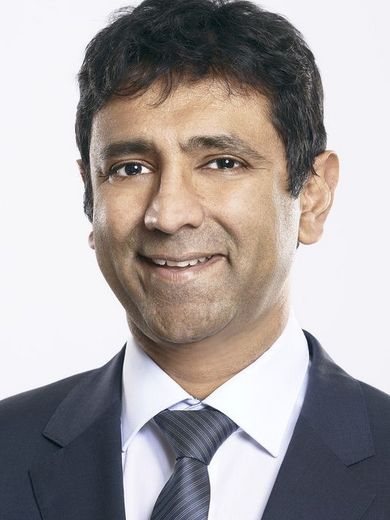
Prof. Dr. Mayank Kumar Golpelwar
Intercultural Management und Intercultural Communication
+49 421 5905 4152
Email
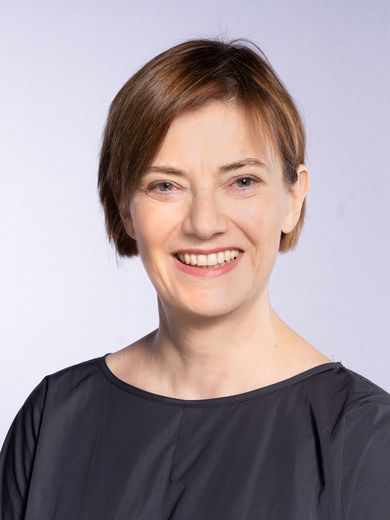
Prof. Dr. Svenja Tams
Professor of Organisation and Project Management
+49 421 5905 4236
Email