Jump directly to the page content
  • AULIS
  • CampInO
  • Webmail
  • Wi-Fi (eduroam)
  • Change password
  • Semester Dates
  • Account Activation
  • Prospective students For prospective students
  • First-semester students For first-semester students
  • International Students
  • Press and media For press and media
  • Job seekers
  • DE
  • Easy English
  • Dark Mode
  • Visual Help
  • Experience studying
    • Programmes
      • Bachelor
      • Master
      • International MBA & Master
    • Before your studies
      • Step by step to university
      • Orientation for prospective students
      • Application and admission
      • International applications
    • During your studies
      • First-semester students
      • Semester dates
      • Logins and portals
      • Formalities
      • Going abroad
      • Complementary offers for students
    • After your studies
      • Master's degree programmes
      • Career perspectives
      • Continuing education
      • Information for Alumni
      • Doctorates
    • All about studying
      • Student life
      • Student participation
      • Healthy through your studies
      • Mensa, canteens and cafeterias
      • Culture
      • Sports
    • Advice and support
      • Central Student Advisory Service
      • Doubting Your Studies
      • Finances
  • Experience research
    • Research and transfer profile
      • Strategic partnerships
      • Institutes
      • Research projects
    • Research and transfer clusters
      • Blue Sciences
      • Digital transformation
      • Quality of life
      • Aerospace
    • Early career researchers
    • Transfer and cooperation
    • Research Services
    • Start-up service & FreiRAUM@HSB
      • Makerspace
  • Experience continuing education
  • Experience HSB
    • News
      • Press Releases
      • News Items
      • Events
    • Faculties
      • School of International Business
      • School of Architecture, Civil and Environmental Engineering
      • School of Social Sciences
      • School of Electrical Engineering and Computer Science
      • School of Nature and Engineering
    • Organisation
      • University Management
      • Administration
      • Central Units
      • Inter-university units
      • Committees and representation of interests
    • Our profile
      • Mission Statement
      • Internationality
      • Equality
      • Diversity
      • Sustainability at HSB
      • Hochschule Bremen at a glance
    • Campus Life
      • People of HSB
      • Location and access
      • History
      • Culture
      • Sports and activities
    • Working at HSB
      • Get to know HSB
      • We are HSB!
      • UAS professorship
      • Job offers
      • Your application to HSB
      • Contact and advice
      • Any further questions?
    • Staff
    • HSB Merchandise
    • AULIS
    • CampInO
    • Webmail
    • Wi-Fi (eduroam)
    • Change password
    • Semester Dates
    • Account Activation
    • Prospective students For prospective students
    • First-semester students For first-semester students
    • International Students
    • Press and media For press and media
    • Job seekers
  • DE
  • Easy English
  • Dark Mode
  • Visual Help
Experience studying
  • Programmes
    • Bachelor
    • Master
    • International MBA & Master
  • Before your studies
    • Step by step to university
    • Orientation for prospective students
    • Application and admission
    • International applications
  • During your studies
    • First-semester students
    • Semester dates
    • Logins and portals
    • Formalities
    • Going abroad
    • Complementary offers for students
  • After your studies
    • Master's degree programmes
    • Career perspectives
    • Continuing education
    • Information for Alumni
    • Doctorates
  • All about studying
    • Student life
    • Student participation
    • Healthy through your studies
    • Mensa, canteens and cafeterias
    • Culture
    • Sports
  • Advice and support
    • Central Student Advisory Service
    • Doubting Your Studies
    • Finances
Experience research
  • Research and transfer profile
    • Strategic partnerships
    • Institutes
    • Research projects
  • Research and transfer clusters
    • Blue Sciences
    • Digital transformation
    • Quality of life
    • Aerospace
  • Early career researchers
  • Transfer and cooperation
  • Research Services
  • Start-up service & FreiRAUM@HSB
    • Makerspace
Experience continuing education
Experience HSB
  • News
    • Press Releases
    • News Items
    • Events
  • Faculties
    • School of International Business
    • School of Architecture, Civil and Environmental Engineering
    • School of Social Sciences
    • School of Electrical Engineering and Computer Science
    • School of Nature and Engineering
  • Organisation
    • University Management
    • Administration
    • Central Units
    • Inter-university units
    • Committees and representation of interests
  • Our profile
    • Mission Statement
    • Internationality
    • Equality
    • Diversity
    • Sustainability at HSB
    • Hochschule Bremen at a glance
  • Campus Life
    • People of HSB
    • Location and access
    • History
    • Culture
    • Sports and activities
  • Working at HSB
    • Get to know HSB
    • We are HSB!
    • UAS professorship
    • Job offers
    • Your application to HSB
    • Contact and advice
    • Any further questions?
  • Staff
  • HSB Merchandise
  1. Homepage
  2. HSB
  3. News
  4. Science up close in the classroom: A successful launch for ‘Researchers at Schools’
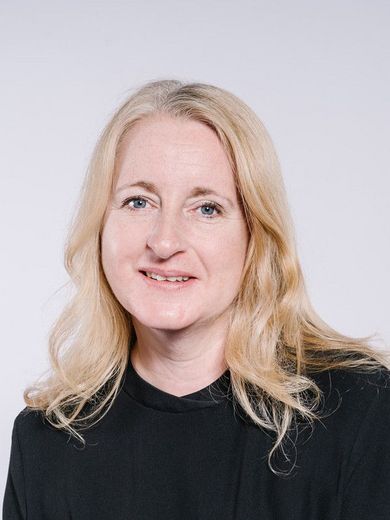
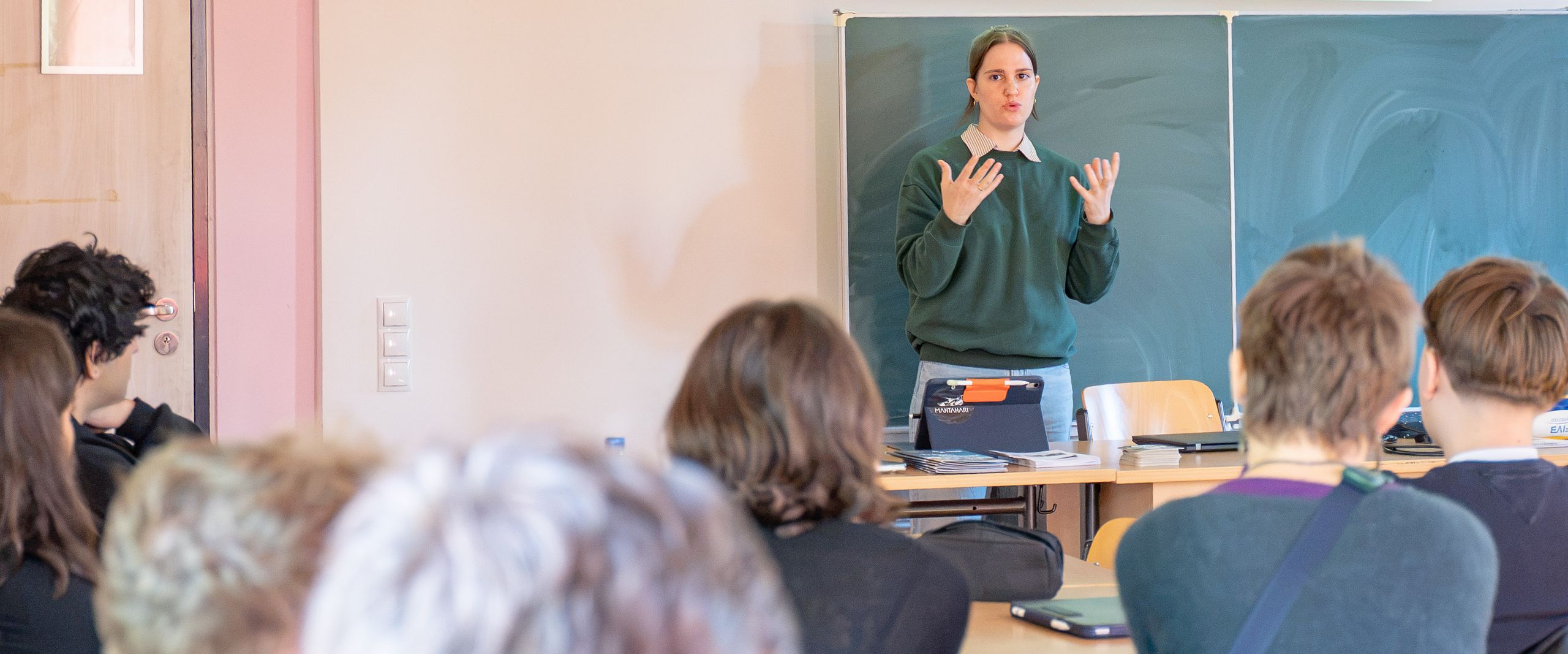
Viktoria Kathrin Janke speaks to a school class about the opportunities and challenges presented by care technologies in care homes
© HSB - Louisa Windbrake
12.10.2026

Science up close in the classroom: A successful launch for ‘Researchers at Schools’

A collaboration between STARS EU and Schule@HSB

As part of the Europe-wide ‘European Researchers’ Night’, Hochschule Bremen - City University of Applied Sciences (HSB) piloted the ‘Researchers at Schools’ programme on 25 September 2026. The aim was to bring scientific research into everyday school life in a clear and engaging way.

Three schools in Bremen took part in the pilot project: the Oberschule am Leibnizplatz, the Wilhelm-Olbers-Oberschule in Hemelingen and the Freie Evangelische Bekenntnisschule in Habenhausen. A total of ten researchers from a wide range of departments at the HSB were present. In clear, concise 20-minute presentations, they outlined their research and then engaged in discussions with the pupils.

Around 200 school pupils from Bremen took part in the event. “The professor gave a really engaging talk – and presented a truly fascinating model in biology,” reported a pupil from the Oberschule am Leibnizplatz enthusiastically. Emmy Weßling from the Wilhelm-Olbers-Oberschule was also impressed: “Thanks to the talk, we’ve gained a broad insight into career fields that might seem unfamiliar at first. This opens up whole new avenues of thought and may spark an interest in finding out more. It was only through this presentation that I realised just how wide-ranging some professions can be.”

It was a welcome challenge for the researchers to explain their research topics, their career paths and their day-to-day work in a school setting. Prof. Dr Stefan Veltel, Professor of Technical Microbiology, said after his visit: “The pupils asked interesting questions – not at all superficial, but well thought out and very relevant to the lecture.”

As well as giving a talk on ‘Opportunities and challenges of care technologies in care homes’, Viktoria Janke was able to draw on her own life experience: „My career path hasn’t been a straight line – and the pupils also asked some interested questions about this.“

The event provided some participants with direct inspiration for their future careers. School pupil Rosila Hussien remarked: “I found it particularly fascinating to learn how bridges are designed and built, and what qualifications are required for the profession.”

At the Wilhelm-Olbers-Oberschule, the talks came at just the right time: “As well as the interesting topics, it was instructive to learn how scientific work is carried out in the various subject areas. Our pupils have to carry out their own project this academic year, applying basic scientific and introductory research methods in the process,” explained Susanne Nadler, upper school coordinator.

At the same time, the presentations also provided teachers with valuable ideas for their lesson planning. Mr Pache, a maths and biology teacher at the Freie Evangelische Bekenntnisschule in Bremen, summed it up: “A fascinating presentation that gave the pupils a deep insight into the technical challenges of a circular economy in food production. In addition, the speaker gave an overview of his personal working life and his career as a research assistant. Many thanks for that.”

The format centred on the aim of sparking young people’s curiosity about science whilst also establishing concrete links to everyday life. In this way, ‘Researchers at Schools’ also helps to prevent scepticism towards science through clear communication and active participation.

The project was carried out as part of the European university alliance STARS EU, in cooperation with Schule@HSB. At the same time, events were held at eight other European locations, bringing research topics directly to the public.  Further information is available at: https://starseu.org/european-researchers-night-2026/. 

The “Researchers at Schools” programme will continue next year.
You can find an overview of the participating academics and their presentations here:

Contact

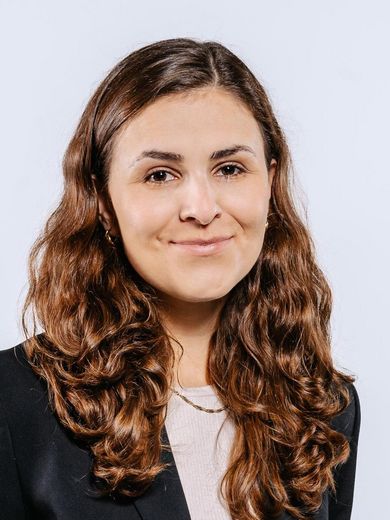
Auf dem Foto ist Katrin Winkler zusehen. Sie hat braune lockige Haare und trägt ein Beiges T-Shirt unter einem schwarzen Blazer.

Katrin Winkler
+49 421 5905-2397
Email

Porträtfoto Kristina Seifert

Kristina Seifert
+49 421 5905 2022
+49 176 1514 0193
Email

  • Everyone is familiar with recycling – but how can this principle be applied to our food production? In my talk, I will demonstrate how water, nutrients and waste materials can be reused multiple times in urban circular systems – from algae and duckweed to insects, fish and chickens. The focus is on how we can produce food in a sustainable way, within our planetary boundaries.

    Speaker: Luca Gerdes Genannt Janßen 

  • The talk provides a brief overview of German research vessels (Why do they exist in the first place? What do they do?). Using examples, it examines specific data that has been collected, including the questions: What errors can occur during data collection? Why is data analysis necessary, and how does it work? It also briefly outlines how artificial intelligence can assist, for example through pattern recognition.

    Speaker: Peter Stegmaier

  • Social innovations enable society, businesses and initiatives to tackle social problems – from local projects to global movements. Be inspired to find out how you, too, can be part of this change.

    Speaker: Prof. Dr. Martin Holi 


  • Technological innovations can help to address the growing challenges in elderly care. In the TCALL project, various care technologies were therefore implemented in three care homes, and their introduction and impact were examined.

    Speaker: Viktoria Kathrin Janke 

  • The successful introduction of care technologies requires clear coordination between all those involved and close support for those using them. Transformation and Innovation Agents (TIAs) play a key role in this by answering questions, sharing knowledge, solving problems and thus ensuring that the technologies are used in the residential care settings.

    Speaker: Karina Westermann

  • Dolphins are agile, efficient swimmers – partly thanks to the properties of their skin. Taking inspiration from dolphin skin, we are developing a coating for watercraft that saves energy as they move through the water.

    Speaker: Prof. Dr. Lars-Uve Schrader

  • The poor state of repair of our bridges is increasingly coming to the public’s attention because their permissible traffic load is being reduced or their lanes are being closed due to construction work. This article summarises my views on this topic. It focuses on how this situation has arisen, how we are currently dealing with it, and what other possible solutions exist. My personal area of specialisation is structural analysis, with or without experimental investigations, and the realistic modelling of structures in computational models.

    Speaker: Prof. Dr. Marc Gutermann 

  • The lecture explores how academics are researching higher education today and in the future – from the decision to undertake a degree, through the characteristics of a good degree programme, to topics such as digitalisation, sustainability and internationalisation. It also examines what the university of the future might look like and what factors are shaping this development.

    Speaker: Andrea Broens & Dr. Johanna Brauns

  • With the help of AI and laboratory techniques, it is possible to modify the proteins of certain viruses so that they could be used as a potential disinfectant against bacteria in animal housing.

    Speaker: Prof. Dr. Stefan Veltel 

Impressions of the day

News from HSB

  • 25.09.2026

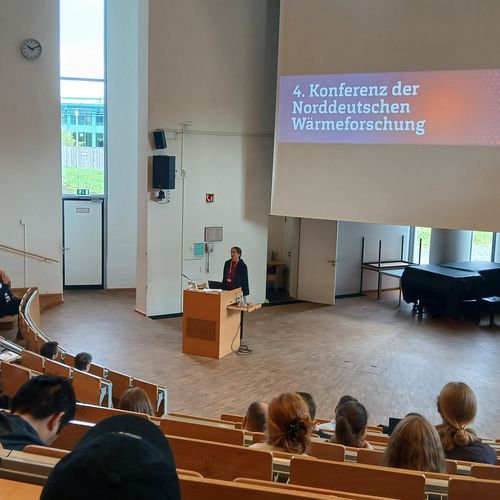
    Hochschule Bremen at the 4th North German Conference on Heat Research

    Begrüßung Konferenz Norddeutschen Wärmeforschung
  • 25.09.2026

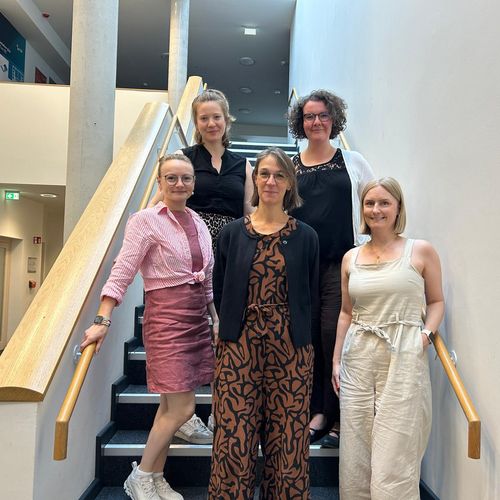
    HSB researchers compare European universities of applied sciences – collaboration within the STARS EU project

    group of women
  • 28.07.2026

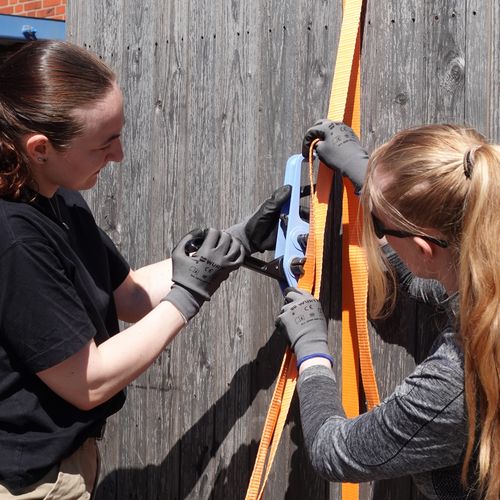
    The Kieserling Foundation enables 48 students from Hochschule Bremen to attend free certificate courses on cargo securing

    Zwei Frauen stehen vor einem Container. Sie spannen Zuggurte, die den Container umspannen.
  • Visit our Instagram profile Visit our Instagram profile
  • Visit our Facebook page
  • Visit our YouTube channel
  • Visit our Xing profile
  • Visit our LinkedIn profile
  • Contact
  • Cookies
  • Location and access
  • Career
  • Legal notice
  • Data privacy policy
  • Accessibility

© HSB - Hochschule Bremen 2026