Researchers at Hochschule Bremen - City University of Applied Sciences (HSB) are investigating how universities of applied sciences (HAW) in Germany, the Netherlands and Sweden are responding to social, economic and geopolitical challenges. Their focus in the research project SLW@HAW is on the areas of student studies, teaching and continuing professional development. The research project has led to collaboration with STARS EU partner universities. In this interview, Prof. Dr Annika Maschwitz, project leader and Vice-President of Academic Affairs and Internationalisation at HSB, provides insights into the project and how it has developed into a successful research collaboration within the STARS EU alliance.
Professor Maschwitz, why did you and your team decide to conduct an international comparative study between Germany, Sweden and the Netherlands? What interests you about it?
Prof. Dr Annika Maschwitz: Political developments, the labour market, demographic trends and their impact on student numbers are influencing higher education institutions across Europe. The Bologna Process Implementation Report shows, for example, that around three-quarters of countries have already taken demographic change into account in strategic and policy-guiding higher education documents: these include Germany, Sweden and the Netherlands. These three countries have in common that they have already implemented measures to improve access to higher education for groups that have previously been under-represented. It is particularly interesting to note that Sweden, with over 30 per cent of its students aged over 30, is well ahead of the Netherlands and Germany. Lifelong learning is therefore conceived and implemented differently in these countries, despite shared European trends. Political and social changes also play an equal role, though this is reflected in varying approaches to these issues within higher education strategy documents.
Sweden and the Netherlands therefore have some fascinating approaches to study and teaching.
That’s right, and the developments and reasoning behind them are particularly interesting, as they may help us draw conclusions about developments at German universities. We are therefore keen to see whether there are different international strategies adopted by universities of applied sciences (HAW) in response to similar challenges. Furthermore, the university of applied sciences (HAW) model, which has long existed in all three countries, has so far been the subject of little research – which makes this type of institution and these countries particularly interesting and relevant.
In what areas do the higher education systems in the three countries differ from one another?
What the respective universities have in common is that they are dedicated to applied sciences. Furthermore, partly as a result of the Bologna Process, they share many similarities in their degree structures – for example, Bachelor’s and Master’s programmes. However, there are also key differences.
Which ones?
Unlike in Germany, the Netherlands, for example, has a study recommendation system for students during their course of study. This so-called ‘Binding Study Advice’ is issued by the end of the first year of study. If students have earned the required number of credits (e.g. 48, 52 or 60 credits) and, where necessary, met additional qualitative requirements, a positive recommendation is issued. If they do not meet the necessary expectations, they receive a negative recommendation. In the event of a negative recommendation, the university may terminate their enrolment. However, these regulations are subject to change and are not always consistent.
Our initial impression is also that Dutch universities of applied sciences place a clearer focus on labour market orientation than in Sweden, where there appears to be a strong emphasis on the student’s development process. In our view, German universities of applied sciences fall somewhere in between.
integrated into the education system in different ways in the three countries. The Dutch strategy aims to ensure that everyone engages in continuous professional development in order to better cope with the rapid changes brought about by digitalisation and environmental issues. Another distinctive feature in the Netherlands is the state-run Open University, where anyone can study regardless of their school-leaving qualifications; this does not exist in Germany in this form, for example. This institution is entirely geared towards academic distance learning and online teaching, which is similar to the programmes offered by major distance-learning universities in Germany. In Sweden, too, the opportunities to undertake a degree course are much more open to so-called ‘non-traditional students’. Lifelong learning is understood as a fundamental, inclusive approach. This means that students at different stages of life are more frequently found attending the same courses. The situation is different in Germany, as continuing education at universities must generally be offered on a cost-recovery basis – primarily for reasons relating to state aid legislation – and is, as a rule, organised separately.
There are also differences regarding the right to award doctorates at universities of applied sciences: in Sweden, the right to award doctorates independently already exists in some fields; in Germany, it is currently being introduced; whilst the Netherlands has so far only had the right to award doctorates in collaboration with universities. However, since 2023, Dutch universities of applied sciences have been running a pilot project for an independent, practice-oriented doctoral degree (Professional Doctor).
How are higher education institutions in the countries studied responding to current developments? Which issues are they prioritising?
We have examined various strategy documents from higher education institutions in the three countries, which are structured differently and, in some cases, pursue different objectives. Whilst, for example, the Swedish documents often describe less concrete measures than the German higher education development plans or structural plans, in the case of the Netherlands we were able to consider plans that most closely resembled the German higher education development plans. Throughout our analysis, our focus was consistently on the organisation of degree programmes, teaching and continuing professional development. It is also important to note that the documents must always be viewed retrospectively, as they were, after all, written at an earlier point in time. For example, the German higher education development plans examined cover the period from 2015 to 2035, with the majority of the plans focusing on the years 2022 to 2026. These were therefore most likely written around 2021/2022.
Despite all the differences in their structure, comparable themes emerge which the higher education institutions address as areas for action. Themes that were addressed in all three federal states include, for example, internationalisation, digitalisation, sustainability and lifelong learning.
However, there are also country-specific themes that point to differing approaches to higher education. For example, the Dutch documents frequently emphasised students’ ‘well-being’, whilst in Sweden the focus was on students’ role as members of society. Although this is also evident in the German documents, it is given less prominence.
A closer look at the forewords to the German higher education development plans in particular reveals that universities of applied sciences most frequently identify sustainability and the COVID-19 pandemic as key challenges, followed by diversity, demographic change and digitalisation. Organisational and structural issues also play a major role, such as campus facilities, staffing levels and the institutions’ own financial situation. With regard to study and teaching, interdisciplinarity, internationalisation and the specific development of degree programmes are also frequently addressed, whilst competition for students and the institutions’ own research strength emerge as further recurring themes.
Our initial analyses thus reveal which issues are the focus of attention for higher education institutions. We hope to gain further insights into how these institutions address these issues in practice – and thereby respond to existing challenges – from the interviews with university leadership teams from all three countries, which we are currently conducting.
What does collaboration with STARS EU partners look like within the framework of the research project?
It takes many forms: last year, for example, all project partners from STARS EU and SLW@HAW hosted a conference at the HSB in Bremen: ‘Conference on Higher Education Research, focusing on Developments in Teaching & Learning’. Here, selected STARS EU partners presented their perspectives and research from their respective EU countries.
Furthermore, based on the interests of SLW@HAW and other stakeholders in STARS EU, a TIG (Thematic Interest Group) entitled ‘Education and Learning in and for a new Working Life (ELW)’ was established. The researchers in this group focus on the relationship between education, learning and working life. The TIG aims to develop approaches and models to equip future students and those interested in continuing professional development with the relevant knowledge, skills and competences to meet the challenges of our time.
The project partners at University West (Trollhättan) in Sweden have also invited us to this year’s WIL (Work-Integrated Learning) conference, where my PhD student Jessica Langolf and I will be presenting the latest findings from our project. We are also in close contact with colleagues at Hanze University (Groningen). It’s great to see how well the collaboration is working here and how much support we’re receiving for our project from their important national perspectives.
As part of this project, Jessica Langolf and Greta Kottwitz are undertaking their doctoral research in the field of higher education research. In two sentences: What topics are you focusing on?
Jessica Langolf: In my doctoral thesis, I am examining the institutional transformation of universities of applied sciences, using the example of the extended right to award doctorates. I find it interesting that the introduction of the right to award doctorates independently not only has an impact on the German higher education system, but also on how universities of applied sciences perceive themselves. They are thus evolving from long-established teaching institutions into independent research organisations. I find it fascinating to observe how these universities are actively shaping this transformation, and how they are, in turn, changing themselves through it.
Greta Kottwitz: The strategic plans of universities of applied sciences often paint certain pictures of students; my first step is to capture these images. But how are they actually constructed? To begin to answer this question, in my doctoral thesis I am interviewing those involved in strategic planning to find out under what conditions they construct these images of students and how these images, in turn, influence them.
Find out more about the SLW@HAW project
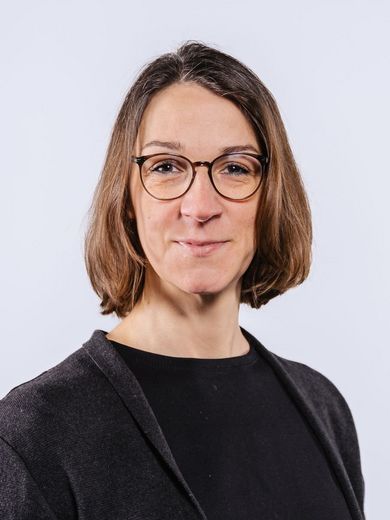
Prof. Dr. Annika Meike Maschwitz
Vice president of Academic Affairs and Internationalisation
+49 421 5905 4161
Email