Under the motto “Connecting (virtual) Mobility across the Alliance”, representatives from all nine partner universities of the European University Alliance STARS EU came together in June for a Staff Week at Hochschule Bremen (HSB). The focus was on digital tools, modern teaching methods, communication via Lego and international mobility. The aim was to break down institutional barriers, reach students more effectively, and further develop the organisation and visibility of the university alliance’s virtual and blended-learning formats.
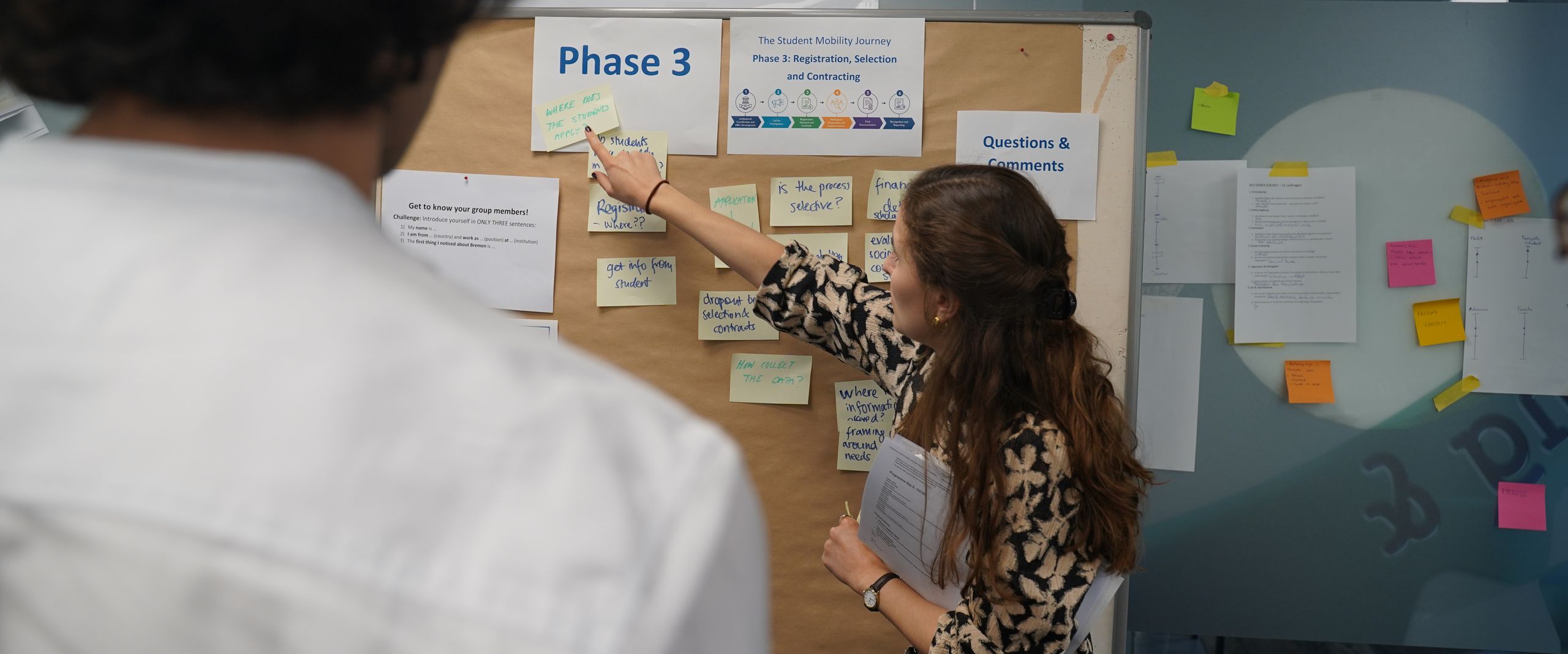
The three-day Staff Week at FreiRAUM@HSB on the Airportstadt campus focused heavily on the student perspective: What expectations, motivations, and hurdles shape international mobility today, and what potential do virtual and blended learning formats offer? As part of a "World Café" at the kickoff, participants traced the "Student Mobility Journey" to identify the precise expectations, motivations, and barriers that students face today.
Together, the partners developed a new concept for communicating mobility opportunities that takes the students' perspective into account. A special focus was placed on the STARS EU student representatives, who are to be involved as active partners in the design process.
"We shouldn't just inform students – we need to inspire them. To do this, we need stories, personal testimonials, and communication on equal footing," summarize Beatriz Medina Fuentes and Thomas Ferstl, members of the STARS EU Communication Group, capturing their key takeaway.
To make complex processes tangible, organisers Claudia Schönherr and Katharina Wittig from the HSB International Office relied on a playful method: a Lego workshop. "When people from nine countries and various fields – administration, IT, marketing – talk about processes, things get complicated quickly. With Lego, we don't just build obstacles – we also build shared solutions," reports co-organiser Wittig.
In case studies, real-world hurdles were analyzed – such as varying deadlines, unclear responsibilities, or complex regulations. Afterwards, the partner universities discussed both internally and bilaterally which processes could be adjusted and how cooperation could be simplified in the future.
“This Staff Week is an excellent example of how collaboration between work packages and joint, cross-institutional design can contribute to questions and aspects of institutional development and change”, says Dr. Jan Bartels. "Furthermore, we succeeded in deepening our understanding of our cultural and administrative differences and developing a shared understanding of our respective needs," summarizes Bartels, coordinator of the STARS EU “Curriculum Lab”.