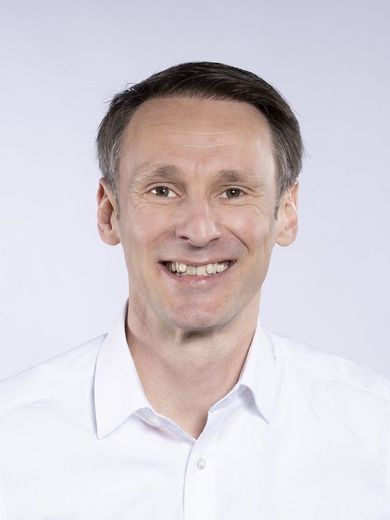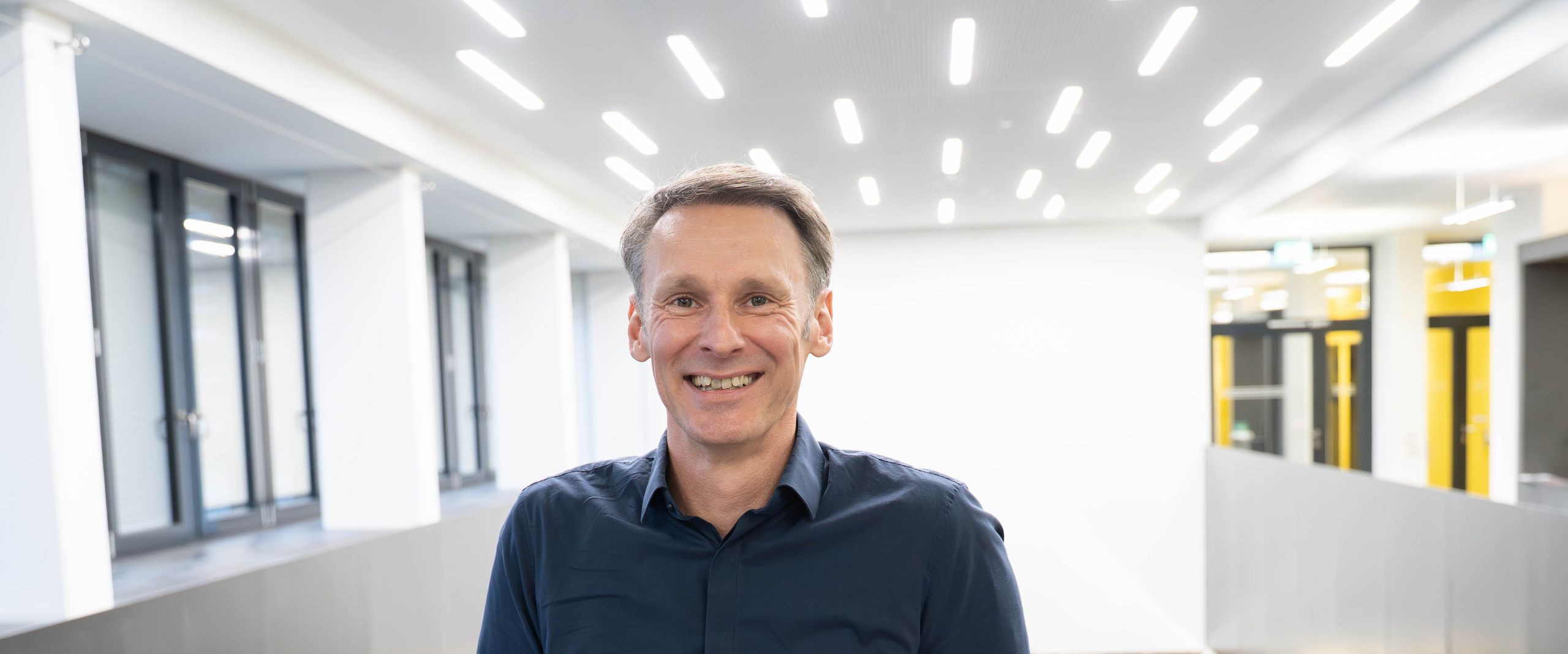
Whether it’s about excessive stress at work, good team dynamics or back pain at your desk, he’s there to help: Markus Schnare heads up health management at the Hochschule Bremen (HSB). He does this out of conviction. After all, people don’t just feel better when they look after their health and foster good team dynamics. They can also work more productively and successfully. In this interview, the 47-year-old explains what his department offers all HSB staff and why first aid for mental health is also important.
Mr Schnare, looking after one’s health at work is important, but complex. How can you support the more than 650 Hochschule Bremen staff members in their day-to-day lives?
Markus Schnare: It is important to me that all staff members enjoy good working conditions. Accordingly, we are developing strategies and trying to raise awareness at an organisational level of effective tools such as the free and anonymous ‘Workplace Social Counselling’ service. Here, staff have the opportunity to receive prompt advice or support with conflict resolution for personal or university-related problems or crises. The social counselling service also acts as a trusted point of contact for all kinds of addiction-related issues.
“Workplace Integration Management” – or BEM for short – is another valuable tool, as it enables us to reduce or even eliminate stress factors that pose a risk to health through a structured process, even without the employee having previously suffered from a serious illness. Furthermore, we take the approach of supporting employees within their teams. Teams can contact me, and together we outline team development measures with external partners as required, focusing, for example, on collaboration, individual needs, processes, communication, self-care or coping with high work intensity.
From time to time, every team needs a space where a healthy degree of openness and trust prevails in communication, so that we can shape our working situation together in a participatory manner and ensure everyone in the team is on board.
What seems much more prominent to many, however, are our health promotion initiatives. Examples include the Digital Health Week in partnership with Techniker Krankenkasse, our comprehensive, free health app, and in-person and online events on topics such as mental health, ergonomics, fascia training and sleep. Here, every employee can choose topics that are of particular interest to them and gain valuable insights to help them put these into practice.
First aid courses for physical emergencies are well known. At the HSB, they are offered by Department 4 – Occupational Health and Safety. Since 2025, your department has been offering a training course in first aid for mental health: Mental Health First Aid (MHFA). What does this involve?
Mental Health First Aid (MHFA) is a globally proven, evidence-based and standardised training programme that is also becoming increasingly well-known at universities.
Trained course participants are equipped to act as a point of contact and guide for mental health issues such as anxiety, panic attacks, depression, substance abuse and much more. They take the concerns of those affected seriously, listen to them and work together to find resources to resolve the problem. Naturally, there are limits to the help a layperson can provide, as they refer individuals with serious symptoms to professionals. They do not make diagnoses or provide therapeutic treatment. As many affected individuals are often reluctant to seek help from external institutions, the first responders – who may be a professor or a colleague – are perhaps already familiar faces and thus present a lower barrier to access. The next course will run in January 2026, and the official launch, including the publication of the website, will take place in February. I would like to take this opportunity to thank all first responders for their commitment at the HSB.
What do you enjoy about your work – and how do you look after your own health?
I generally enjoy my work, as I find it very meaningful. All our staff work so hard every day to keep the complex HSB system running. It therefore motivates me to support these wonderful colleagues during what can sometimes be challenging times, and to continue campaigning for healthy working conditions. If you want to tackle tough challenges, you have to look after yourself. I’m happy to do that by working out to reduce the stress hormone cortisol after a tiring day, or by listening to ‘The Three Investigators’ in the bath. But I also find spending time with friends and loved ones very supportive.