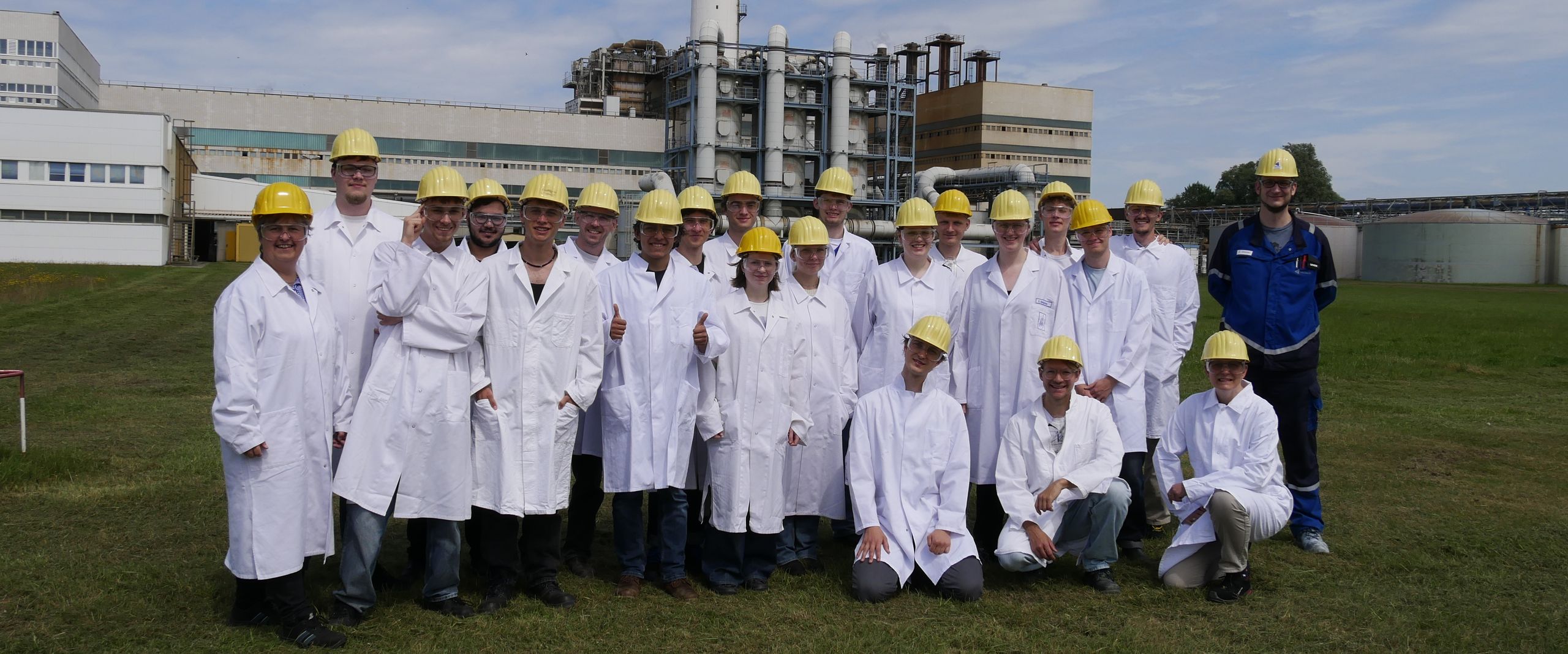
As part of a three-day field trip, students on the international Environmental Engineering degree programme gained practical insights into key areas of environmental process engineering, energy supply and industrial production and treatment processes. Places visited included Hasbruch, the Fraunhofer IWES, the Varel paper and board mill, the ENERGY HUB PORT Wilhelmshaven, KRONOS Titan and the Sandstedt sewage treatment works.
To kick off their three-day field trip as part of the ‘Ecosystems and Fundamentals of Environmental Process Engineering’ module, second-semester students on the international Environmental Engineering degree programme visited the Hasbruch, a historic deciduous woodland area covering around 630 hectares (now comprising one-third oak and one-fifth beech) situated between Delmenhorst and Oldenburg. Whilst there, they were able to marvel at, amongst other things, the approximately 1,200-year-old Friederike Oak, with a diameter of 3.2 metres – one of the oldest and mightiest oaks in Germany – and gained insights into the development of near-natural forest ecosystems as well as the area’s importance for nature conservation and species protection.
The group then travelled to the Fraunhofer Institute for Wind Energy Systems (IWES) in Bremerhaven, where the group leader of Hydrogen Lab Bremerhaven, Mr Kevin Schalk, presented the research activities on the use of wind energy for the direct production of green hydrogen and showed the group the test sites featuring hydrogen systems and PEM electrolysers.
A prime practical example is the public hydrogen refuelling station in Bremerhaven. Mr André Kiwitz, co-founder of Green Fuels, introduced the students to the process plant, where buses, lorries and cars can refuel with hydrogen at two different refuelling points. Refuelling takes place at 350 bar for commercial vehicles and 700 bar for cars. In total, 1,200 kg of regionally produced green hydrogen can be dispensed here within 24 hours.
On the second day, there were several items on the programme. In the morning, the students visited one of Europe’s largest sites in the paper industry, Papier- und Kartonfabrik Varel GmbH & Co. KG, which has an annual production capacity of 970,000 tonnes across four modern production lines. Since 1950, the site has been producing environmentally friendly corrugated paper and cardboard of various thicknesses, qualities and colours from waste paper.
© Michelle Holzner (Papier- und Kartonfabrik Varel GmbH & Co. KG)
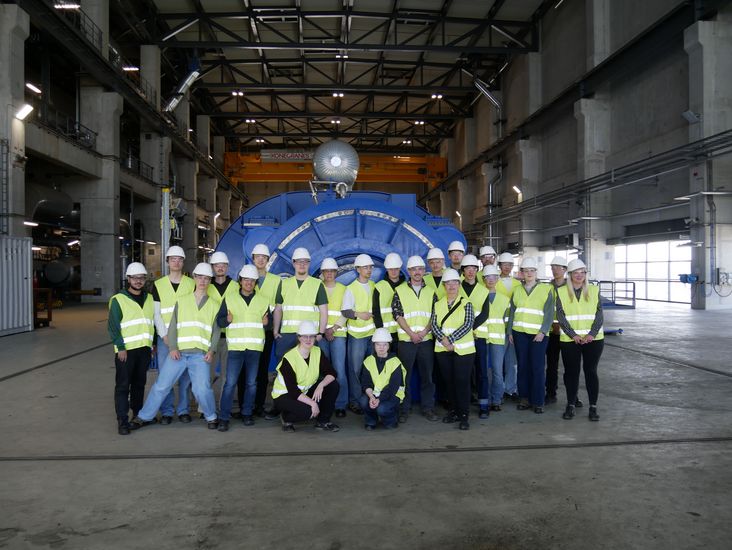
In the afternoon, the group visited the ENERGY HUB PORT of Wilhelmshaven, which is based at the JadeWeserPort. Here, the students were able to gain an insight into the operational facilities of the Nord-West-Ölleitung (NWO) in Wilhelmshaven. The focus was on the tanker unloading jetty and the adjoining tank farm. The mineral oil delivered by tankers is unloaded via the tanker unloading jetty, temporarily stored in the tank farm and then transported via long-distance pipelines to the Rhine-Ruhr region. The NWO is regarded as the nucleus of Germany’s only deep-water port in Wilhelmshaven and has developed into a central hub for the transhipment, storage and onward transport of mineral oil. As a result, Wilhelmshaven has become Germany’s most important port for mineral oil imports.
Situated in the immediate vicinity of the NWO is the Wilhelmshaven hard coal-fired power station, which came into operation in 2015 and, with an efficiency of around 46 per cent, ranks among the most modern and efficient plants in the world. Thanks to its prominent location at the port and its highly advanced technical equipment, the power station has the potential to continue to play a significant role in the regional energy supply in northern Germany even after the phase-out of coal. The plant currently has a net electrical output of 726 megawatts and can generate up to 5.5 billion kilowatt-hours of electricity annually – roughly one per cent of Germany’s total electricity production. During the visit, the students gained an insight into the various processing stages and were treated to an impressive view of the harbour area and the Niedersachsen Bridge.
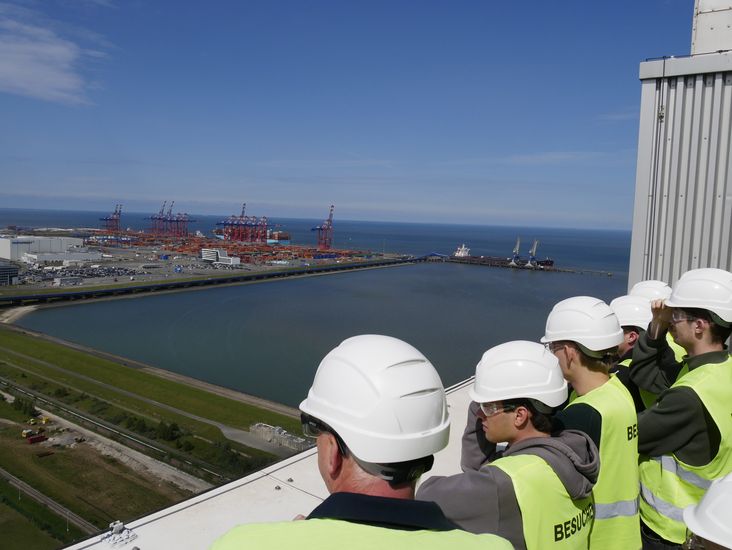
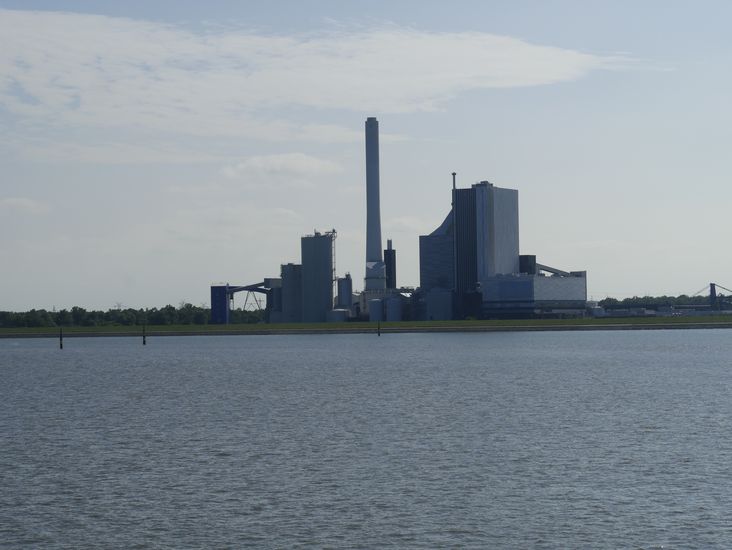
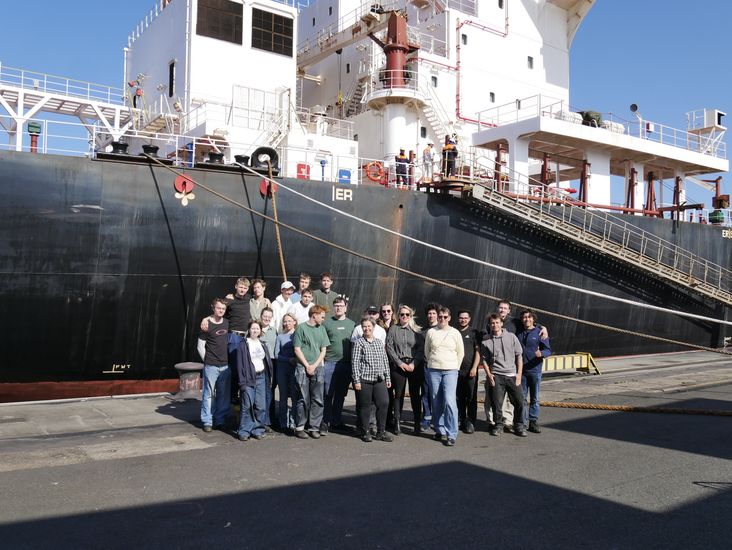
The bridge, which stands on 680 foundation piles, opened in 1972 and is primarily used for the transhipment of imported coal for the neighbouring coal-fired power station. It also forms part of an efficient infrastructure in view of the impending structural shift towards renewable energy sources. Thanks to the excellent contacts of Ms Schäfer-Biscan (coordinator at Wirtschaftsförderungsgesellschaft Wilhelmshaven mbH), we were able to drive across the Niedersachsen Bridge and witness an unloading operation.
On the final day of the field trip, the group visited KRONOS Titan GmbH in Nordenham. Titanium dioxide pigments have been produced there since 1969; these are used in numerous applications, including paints, varnishes, plastics, paper, building materials, cosmetics and pharmaceuticals. Following a theoretical introduction by Mr Thomas Simon and his colleague Edgar Steiner to titanium dioxide production using the sulphate process, the students had the opportunity to examine individual process steps (from black ore to white pigment) in more detail on site.
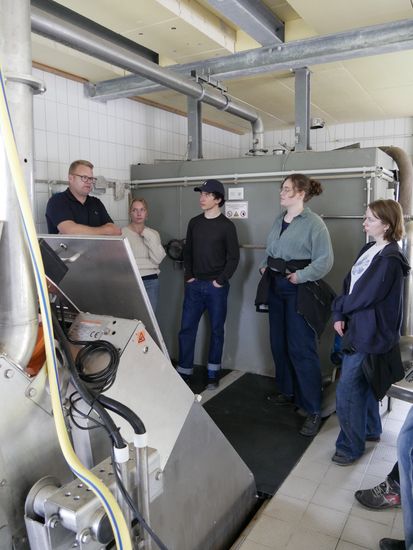
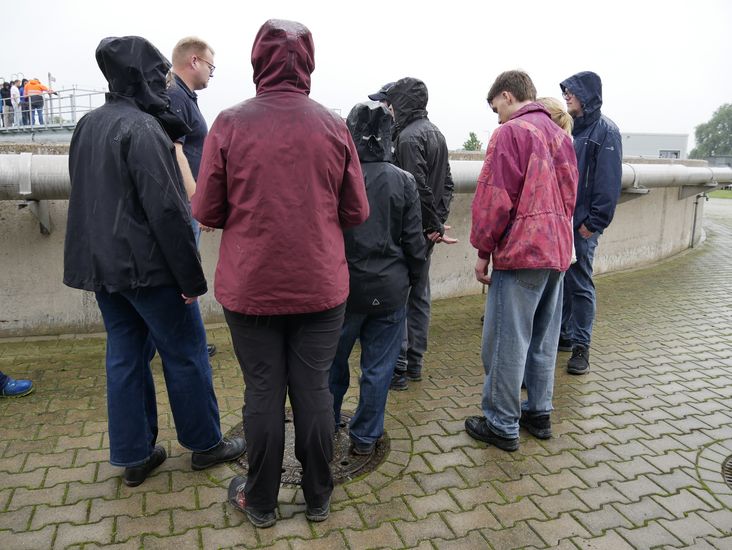
To round off the field trip, the students visited the Sandstedt sewage treatment works, one of 47 such facilities operated by the Oldenburg-East Frisian Water Board (OOWV). There, Ms Sabrina Hennekens, a former Master’s student on the International Environmental Engineering programme, together with her colleagues, explained the individual stages of wastewater treatment. Both the mechanical treatment processes in the screening plant and grit chamber and the biological-chemical treatment process were presented and clearly explained.