Jump directly to the page content
  • AULIS
  • CampInO
  • Webmail
  • Wi-Fi (eduroam)
  • Change password
  • Semester Dates
  • Account Activation
  • Prospective students For prospective students
  • First-semester students For first-semester students
  • International Students
  • Press and media For press and media
  • Job seekers
  • DE
  • Easy English
  • Dark Mode
  • Visual Help
  • Experience studying
    • Programmes
      • Bachelor
      • Master
      • International MBA & Master
    • Before your studies
      • Step by step to university
      • Orientation for prospective students
      • Application and admission
      • International applications
    • During your studies
      • First-semester students
      • Semester dates
      • Logins and portals
      • Formalities
      • Going abroad
      • Complementary offers for students
    • After your studies
      • Master's degree programmes
      • Career perspectives
      • Continuing education
      • Information for Alumni
      • Doctorates
    • All about studying
      • Student life
      • Student participation
      • Healthy through your studies
      • Mensa, canteens and cafeterias
      • Culture
      • Sports
    • Advice and support
      • Central Student Advisory Service
      • Doubting Your Studies
      • Finances
  • Experience research
    • Research and transfer profile
      • Strategic partnerships
      • Institutes
      • Research projects
    • Research and transfer clusters
      • Blue Sciences
      • Digital transformation
      • Quality of life
      • Aerospace
    • Early career researchers
    • Transfer and cooperation
    • Research Services
    • Start-up service & FreiRAUM@HSB
      • Makerspace
  • Experience continuing education
  • Experience HSB
    • News
      • Press Releases
      • News Items
      • Events
    • Faculties
      • School of International Business
      • School of Architecture, Civil and Environmental Engineering
      • School of Social Sciences
      • School of Electrical Engineering and Computer Science
      • School of Nature and Engineering
    • Organisation
      • University Management
      • Administration
      • Central Units
      • Inter-university units
      • Committees and representation of interests
    • Our profile
      • Mission Statement
      • Internationality
      • Equality
      • Diversity
      • Sustainability at HSB
      • Hochschule Bremen at a glance
    • Campus Life
      • Location and access
      • History
      • Culture
      • Sports and activities
    • Working at HSB
      • Get to know HSB
      • We are HSB!
      • UAS professorship
      • Job offers
      • Your application to HSB
      • Contact and advice
      • Any further questions?
    • Staff
    • AULIS
    • CampInO
    • Webmail
    • Wi-Fi (eduroam)
    • Change password
    • Semester Dates
    • Account Activation
    • Prospective students For prospective students
    • First-semester students For first-semester students
    • International Students
    • Press and media For press and media
    • Job seekers
  • DE
  • Easy English
  • Dark Mode
  • Visual Help
Experience studying
  • Programmes
    • Bachelor
    • Master
    • International MBA & Master
  • Before your studies
    • Step by step to university
    • Orientation for prospective students
    • Application and admission
    • International applications
  • During your studies
    • First-semester students
    • Semester dates
    • Logins and portals
    • Formalities
    • Going abroad
    • Complementary offers for students
  • After your studies
    • Master's degree programmes
    • Career perspectives
    • Continuing education
    • Information for Alumni
    • Doctorates
  • All about studying
    • Student life
    • Student participation
    • Healthy through your studies
    • Mensa, canteens and cafeterias
    • Culture
    • Sports
  • Advice and support
    • Central Student Advisory Service
    • Doubting Your Studies
    • Finances
Experience research
  • Research and transfer profile
    • Strategic partnerships
    • Institutes
    • Research projects
  • Research and transfer clusters
    • Blue Sciences
    • Digital transformation
    • Quality of life
    • Aerospace
  • Early career researchers
  • Transfer and cooperation
  • Research Services
  • Start-up service & FreiRAUM@HSB
    • Makerspace
Experience continuing education
Experience HSB
  • News
    • Press Releases
    • News Items
    • Events
  • Faculties
    • School of International Business
    • School of Architecture, Civil and Environmental Engineering
    • School of Social Sciences
    • School of Electrical Engineering and Computer Science
    • School of Nature and Engineering
  • Organisation
    • University Management
    • Administration
    • Central Units
    • Inter-university units
    • Committees and representation of interests
  • Our profile
    • Mission Statement
    • Internationality
    • Equality
    • Diversity
    • Sustainability at HSB
    • Hochschule Bremen at a glance
  • Campus Life
    • Location and access
    • History
    • Culture
    • Sports and activities
  • Working at HSB
    • Get to know HSB
    • We are HSB!
    • UAS professorship
    • Job offers
    • Your application to HSB
    • Contact and advice
    • Any further questions?
  • Staff
  1. Homepage
  2. HSB
  3. News
  4. Weser Bridge load test: Marc Gutermann provides insights into the measurement tasks carried out by IFES
Porträtbild Prof. Marc Gutermann vor der Bürgermeister-Smidt-Brücke
© HSB - Nils Hensel
26.09.2025

Weser Bridge load test: Marc Gutermann provides insights into the measurement tasks carried out by IFES

Hochschule Bremen (HSB) thrives on the people who study, work and enrich the Hochschule as visitors. In our ‘Three Questions for…’ series, we introduce some of these people – sharing their perspectives, projects and visions. Here: Prof. Dr Marc Gutermann. The engineer and his team from the Institute for Experimental Statics (IFES) played a key role in the load test on the Bürgermeister-Smidt-Brücke at the end of August. For this, trams – both empty and loaded with sandbags – drove across the bridge individually and in parallel for half a day. It is one of the city’s most important transport links and has been closed to trams for several months due to structural restrictions. In the interview, Marc Gutermann reveals what the IFES’s role was in the project run by the Office for Roads and Transport (ASV) and Bremer Straßenbahn AG (BSAG).

Mr Gutermann, the load test attracted a great deal of (media) attention. However, neither you nor your team were to be seen. You spent the whole day working out of sight beneath the bridge. What was your role?

For this project, we were responsible for the measurement equipment, data collection and analysis. With 120 measurement points on the bridge, this represented an unusually large amount of work for us. In preparation for this day, the grbv office in Hanover had already carried out extensive calculations using computer models. As a result, they were already very familiar with the structure. Our colleagues gave us precise instructions on which measurement parameters were important at which points for assessing the load-bearing structure. We then consulted with them and took care of selecting suitable sensors, their installation, cabling and the entire measurement chain, so that everything would run smoothly on the day of the tests.

We are now busy reducing nearly two gigabytes (GB) of data columns. It is to our advantage that we have frequently provided this comprehensive service before, for example, for the assessment of masonry arch bridges for the Austrian Federal Railways (ÖBB). We are therefore optimistic that we will be able to provide the firm with the essential data as quickly as possible for the subsequent computational analysis.


Are there any other projects in which you and IFES are providing support in Bremen and the surrounding region with your expertise?

Yes, quite a few. We see ourselves as partners to all stakeholders who face challenges in assessing existing structures. Over the past five years, we have assessed eight structures in Bremen through load tests – a total of around 70 in Germany, Austria and the Netherlands. However, these have mainly been in the field of building construction.

Although here at Bremen University of Applied Sciences we were involved in the development of the BELFA load-testing vehicle for load tests on road bridges and operated it for over ten years, we are now primarily engaged in testing solid-construction floor and roof structures. In Bremen, these have most recently included schools, industrial halls and sports halls, as well as residential buildings, but also the cross-vault of the barrel cellar beneath the Domshof.


An exciting job. How can one qualify for such a career at HSB?

There are several ways to approach the experimentally supported assessment of structures, as there is no specialised training programme for it. Most people working in this field have studied civil engineering with a specialisation in structural engineering – after all, it involves the assessment of load-bearing structures. As measurement-based structural monitoring of buildings is becoming increasingly diverse, experts from the fields of measurement technology and data management are naturally also required. This would then be approached via relevant specialisations within degree programmes in mechanical engineering, electrical engineering or computer science.

At Hochschule Bremen, my preferred route would be to first complete a Bachelor’s degree in Civil Engineering, followed by a Master’s degree in Civil Engineering – Sustainable Planning and Construction. Of course, any student can get a taste of the work here at our institute alongside their studies. After all, the right personal attitude is crucial for this job; strenuous manual labour is also part of the daily routine. At other universities, a PhD would be a good option to acquire skills in the fields of experimental and measurement technology as well as data processing. Or you could join a company straight away. In my own experience, you need at least two years’ practical experience to begin to grasp everything that needs to be taken into account when planning and carrying out experiments. So it’s a long road to becoming an ‘experimenter’, but it’s well worth it!
News from HSB

  • 15.09.2025

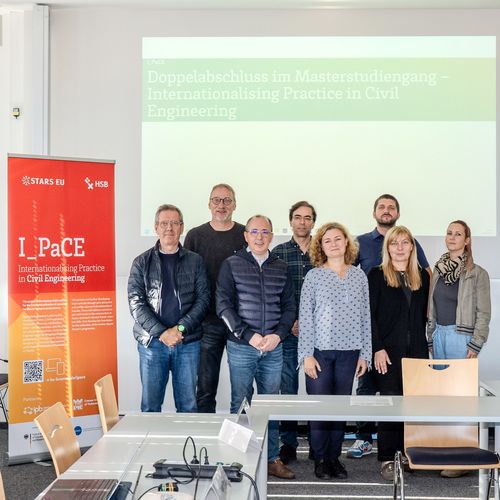
    I-PaCE Work Meeting in Bremen – Internationalization in the Final Phase

    Gruppenfoto der Workshop-Teilnehmer:innen: @HSB - Marina Pister
  • 05.05.2025

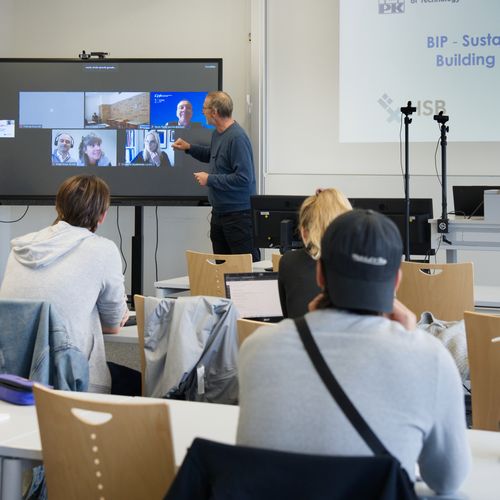
    I_PaCE project: International challenge-based learning at the HSB

    [Translate to English:] CBL-Woche mit Masterstudierenden der HSB gemeinsam mit der Partneruniversität IPB (Bragança/Portugal). Foto: HSB
  • 26.03.2025

    I_PaCE team visits the IPB in Bragança for third working meeting

    BIP as part of the I_PaCE research programme. Photo:HSB
  • Visit our Instagram profile Visit our Instagram profile
  • Visit our Facebook page
  • Visit our YouTube channel
  • Visit our Xing profile
  • Visit our LinkedIn profile
  • Contact
  • Cookies
  • Location and access
  • Career
  • Legal notice
  • Data privacy policy
  • Accessibility

© HSB - Hochschule Bremen 2026