Jump directly to the page content
  • AULIS
  • CampInO
  • Webmail
  • Wi-Fi (eduroam)
  • Change password
  • Semester Dates
  • Account Activation
  • Prospective students For prospective students
  • First-semester students For first-semester students
  • International Students
  • Press and media For press and media
  • Job seekers
  • DE
  • Easy English
  • Dark Mode
  • Visual Help
  • Experience studying
    • Programmes
      • Bachelor
      • Master
      • International MBA & Master
    • Before your studies
      • Step by step to university
      • Orientation for prospective students
      • Application and admission
      • International applications
    • During your studies
      • First-semester students
      • Semester dates
      • Logins and portals
      • Formalities
      • Going abroad
      • Complementary offers for students
    • After your studies
      • Master's degree programmes
      • Career perspectives
      • Continuing education
      • Information for Alumni
      • Doctorates
    • All about studying
      • Student life
      • Student participation
      • Healthy through your studies
      • Mensa, canteens and cafeterias
      • Culture
      • Sports
    • Advice and support
      • Central Student Advisory Service
      • Doubting Your Studies
      • Finances
  • Experience research
    • Research and transfer profile
      • Strategic partnerships
      • Institutes
      • Research projects
    • Research and transfer clusters
      • Blue Sciences
      • Digital transformation
      • Quality of life
      • Aerospace
    • Early career researchers
    • Transfer and cooperation
    • Research Services
    • Start-up service & FreiRAUM@HSB
      • Makerspace
  • Experience continuing education
  • Experience HSB
    • News
      • Press Releases
      • News Items
      • Events
    • Faculties
      • School of International Business
      • School of Architecture, Civil and Environmental Engineering
      • School of Social Sciences
      • School of Electrical Engineering and Computer Science
      • School of Nature and Engineering
    • Organisation
      • University Management
      • Administration
      • Central Units
      • Inter-university units
      • Committees and representation of interests
    • Our profile
      • Mission Statement
      • Internationality
      • Equality
      • Diversity
      • Sustainability at HSB
      • Hochschule Bremen at a glance
    • Campus Life
      • Location and access
      • History
      • Culture
      • Sports and activities
    • Working at HSB
      • Get to know HSB
      • We are HSB!
      • UAS professorship
      • Job offers
      • Your application to HSB
      • Contact and advice
      • Any further questions?
    • Staff
    • AULIS
    • CampInO
    • Webmail
    • Wi-Fi (eduroam)
    • Change password
    • Semester Dates
    • Account Activation
    • Prospective students For prospective students
    • First-semester students For first-semester students
    • International Students
    • Press and media For press and media
    • Job seekers
  • DE
  • Easy English
  • Dark Mode
  • Visual Help
Experience studying
  • Programmes
    • Bachelor
    • Master
    • International MBA & Master
  • Before your studies
    • Step by step to university
    • Orientation for prospective students
    • Application and admission
    • International applications
  • During your studies
    • First-semester students
    • Semester dates
    • Logins and portals
    • Formalities
    • Going abroad
    • Complementary offers for students
  • After your studies
    • Master's degree programmes
    • Career perspectives
    • Continuing education
    • Information for Alumni
    • Doctorates
  • All about studying
    • Student life
    • Student participation
    • Healthy through your studies
    • Mensa, canteens and cafeterias
    • Culture
    • Sports
  • Advice and support
    • Central Student Advisory Service
    • Doubting Your Studies
    • Finances
Experience research
  • Research and transfer profile
    • Strategic partnerships
    • Institutes
    • Research projects
  • Research and transfer clusters
    • Blue Sciences
    • Digital transformation
    • Quality of life
    • Aerospace
  • Early career researchers
  • Transfer and cooperation
  • Research Services
  • Start-up service & FreiRAUM@HSB
    • Makerspace
Experience continuing education
Experience HSB
  • News
    • Press Releases
    • News Items
    • Events
  • Faculties
    • School of International Business
    • School of Architecture, Civil and Environmental Engineering
    • School of Social Sciences
    • School of Electrical Engineering and Computer Science
    • School of Nature and Engineering
  • Organisation
    • University Management
    • Administration
    • Central Units
    • Inter-university units
    • Committees and representation of interests
  • Our profile
    • Mission Statement
    • Internationality
    • Equality
    • Diversity
    • Sustainability at HSB
    • Hochschule Bremen at a glance
  • Campus Life
    • Location and access
    • History
    • Culture
    • Sports and activities
  • Working at HSB
    • Get to know HSB
    • We are HSB!
    • UAS professorship
    • Job offers
    • Your application to HSB
    • Contact and advice
    • Any further questions?
  • Staff
  1. Homepage
  2. Study
  3. Civil Engineering M.Sc. - Sustainable Planning and Building: Double Degree

Civil Engineering M.Sc. - Sustainable Planning and Building

Optional international study mode with Double Degree

In the international programme, you will complete your studies with a Master of Science (HSB) and  “Mestrado em Engenharia Civil” from the Polytechnic Institute of Bragança (IPB) in Portugal.


In the optional international study mode Civil Engineering M.Sc. - Sustainable Planning and Building students have the opportunity to also obtain the “Mestrado em Engenharia Civil”, as part of a partnership with the Polytechnic Institute of Bragança (IPB), a Portuguese University of Applied Sciences. A Master’s semester at the HSB is followed by a semester abroad at the IPB. As well as undertaking an in-depth English-language specialisation in civil engineering at our partner university, you will also learn to adapt to different contexts, perspectives and cultures, and improve your foreign language skills. Furthermore, we reward you with an additional Master’s degree from a second European university – a unique selling point on the international job market.

Places of study

Bremen

Die Hochschule Bremen (HSB) ist eine international ausgerichtete Universität der angewandten Wissenschaften und bietet einen projektorientierten, praxisnahen und forschungsorientierten Masterstudiengang Bauingenieurwesen M.Sc. an, dessen Schwerpunkt auf den nachhaltigen Planen und Bauen im Bestand und zukünftigen Baukonstruktionen liegt. Bremen bietet neben dem Studium eine Vielzahl von Möglichkeiten der Freizeitgestaltung. Die Nordsee-Inseln und Hamburg sind nahe Reiseziele.

Bragança 

The Polytechnic Institute of Bragança (IPB) is situated in north-eastern Portugal, in the Trás-os-Montes region. As the former seat of the House of Braganza, which provided the Portuguese monarchs (1640–1910), the town of Bragança boasts a rich history, a well-preserved castle and a stunning natural landscape. The nature reserve Parque Natural de Montesinho, the Douro-Tal and Porto are destinations close by. 

In 1990, the Bragança Institute of Technology and Management (ESTiG) was established, dedicated to education and research and development in the fields of engineering and economics. The institute is one of the largest higher education institutions in the country. ESTiG is currently involved in numerous research projects within national and international partnerships and also offers high-quality services to public and private organisations under various cooperation agreements. In 2025, ESTiG launched the Sustainable Construction Research Group.

Programme structure

Programme structure with start in the winter semester

    • intra- or interdisciplinary subject matter related to the specific current project (to strengthen professional competence in the respective discipline) and methods (to strengthen methodological competence in the respective discipline). 
    • Selected project management methods, research methodologies 
  • The module serves to teach inventory analysis for the practical application, networking and consolidation of basic theoretical knowledge. The following aspects are covered in detail:

    • Fundamentals of building analysis and as-built surveys
    • Dealing with hist. Materials, construction methods, inventory documents and sources
    • Basics of structural building surveys incl. measuring and testing technology
    • Planning processes for building in existing structures
    • Stochastic methods for data evaluation
    • Basics of risk analysis
    • Digital methods for as-built surveys for digital building modelling- “digital twin”

  • • Building pollutants
    • Demolition techniques incl. machine technology and protective measures (noise, dust, pollutants)
    • Stability during demolition, incl. special construction methods (e.g. prestressed concrete)
    • Material separation and waste legislation (selective demolition, mixing ban, waste recycling)
    • Construction waste processing and recycling

  • • Historical calculation methods and safety concepts; recalculation guidelines
    • Influence of historical materials on structural design
    • Use of modern construction products and standards in existing buildings, in particular for the reinforcement of supporting structures
    • Preparation of verifiable static and dynamic calculations in the field of structural and civil eng.
    • Load-bearing capacity analyses of existing components using non-linear calculation methods…

  • Mobility buildings 

    • Multimodality: seamless transition between different modes of transport, such as buses, trains, bicycles and pedestrians.
    • Integration: Buildings integrate different modes and services to offer an efficient and well-connected mobility solution.
    • Accessibility: special attention is paid to barrier-free access and services to facilitate use for people with reduced mobility.
    • Sustainability: the preservation of buildings contributes to the CO2 balance (grey energy)
    • Urban integration: the conception and design of buildings so that they fit into the urban environment and contribute to urban development.
    • Modularity/flexibility: They can be adapted to different urban planning conditions to meet the specific requirements of a location.
    • Excursions to exemplary mobility buildings or existing buildings that can be converted

    Experiment, Model and Simulation

    Mathematical forecasts, process and procedure visualizations as well as parameter studies and data interpretation are carried out on selected models from the construction industry are carried out. The following aspects from the following subject areas are dealt with in detail:

    • Modeling of structural systems under static and dynamic loads in civil engineering
    • Numerical methods for solving ordinary and partial differential equations
    • Analytical methods for solving simple ordinary differential equations
    • Model simulations with MATLAB and commercial FE programs
    • Measurement-based structural analysis

    • intra- or interdisciplinary subject matter related to the specific current project (to strengthen professional competence in the respective discipline) and methods (to strengthen methodological competence in the respective discipline). 
    • Selected project management methods, research methodologies 
  • You can find the compulsory elective modules available at IPB in the module manual. 


  • • Relevant current problems from the field of civil engineering (topic assignment)
    • Design of the scientific work "Master's thesis"
    • Literature acquisition and evaluation
    • Time management
    • Presentation and discussion of work results

    In the middle of the semester, each Master's student gives a presentation on their topic and presents their approaches, concepts and proposed solutions in a discussion with the other students and university lecturers.

Programme structure with start in the summer semester

    • intra- or interdisciplinary subject matter related to the specific current project (to strengthen professional competence in the respective discipline) and methods (to strengthen methodological competence in the respective discipline). 
    • Selected project management methods, research methodologies 


  •  

    • Role, concepts, processes, and tools of BIM (Building Information Modelling) management including, among others, Employer Information Requirements (EIR) and Use Cases (UC). 
    • Principles and methods of classical, agile, and hybrid project management in the context of BIM. 
    • Leadership styles and leadership competencies. 
    • BIM standards and guidelines. 


    • Fundamentals and concepts of sustainability in the building industry
    • Environmental impacts, protection goals and level of sustainability in the construction industry
    • Concepts and tools (LCC/LCA) for life cycle-oriented construction planning
    • Certification systems at product and building level
    • Sustainability concepts for building with existing buildings and strategies for decarbonization in the construction industry
  • In the module, the theoretical principles of the following topics are developed, explained using practical construction examples and deepened using calculation examples.

    • Design and calculation of hydraulic engineering structures such as
    • Dikes, flood protection systems,
    • dams,
    • groynes and breakwaters,
    • locks and weir structures as well as
    • harbour and quay facilities.

    with special requirements for subsoil and stability, taking into account

    • Support systems with columns and geogrid reinforcement,
    • Subsoil-structure interaction (bedding models),
    • Material laws of soil mechanics, shear laws,
    • subsoil hydraulics,
    • Flow forces in the soil,
    • Earth pressure and earth resistance in flowing groundwater

  • Sustainable Planning and Construction in Infrastructure

    • Sustainable Mobility Concepts
    • Water Cycles
    • Water Reuse, ‘Fit for Purpose’ Water Concepts
    • Planning Interdependencies in Infrastructure Construction

    Sustainable Planning and Construction in Structural Engineering

    Current course content in this field

    • Numerical methods in reinforced concrete, prestressed concrete and steel construction
    • Fatigue analysis in accordance with Eurocode 2 and Eurocode 3
    • Application of fracture mechanics
    • Dynamic analysis of structures
    • intra- or interdisciplinary subject matter related to the specific current project (to strengthen professional competence in the respective discipline) and methods (to strengthen methodological competence in the respective discipline). 
    • Selected project management methods, research methodologies 
  • You can find the compulsory elective modules available at IPB in the module manual. 

  • You can find the compulsory elective modules available at IPB in the module manual. 

  • You can find the compulsory elective modules available at IPB in the module manual. 

  • You can find the compulsory elective modules available at IPB in the module manual. 

  • • Relevant current problems from the field of civil engineering (topic assignment)
    • Design of the scientific work "Master's thesis"
    • Literature acquisition and evaluation
    • Time management
    • Presentation and discussion of work results

    In the middle of the semester, each Master's student gives a presentation on their topic and presents their approaches, concepts and proposed solutions in a discussion with the other students and university lecturers.

Modul manual

  • Modual manual Civil Engineering M.Sc. - Sustainable Planning and Building - Optional international study mode with Double Degree (PDF, 1 MB, File does not meet accessibility standards)

Examination regulations (German)

  • MPO Bau 2024 (PDF, 358 KB, File does not meet accessibility standards)

Contact

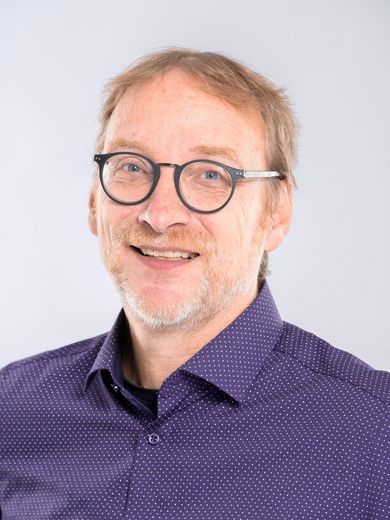
Porträtfoto Thomas Rauscher

Prof. Dr.-Ing. Thomas Rauscher
Engineering mathematics and construction informatics
+49 421 5905 2315
Email

  • Visit our Instagram profile Visit our Instagram profile
  • Visit our Facebook page
  • Visit our YouTube channel
  • Visit our Xing profile
  • Visit our LinkedIn profile
  • Contact
  • Cookies
  • Location and access
  • Career
  • Legal notice
  • Data privacy policy
  • Accessibility

© HSB - Hochschule Bremen 2026